
Spring Core Container
本文介绍spring Core Container
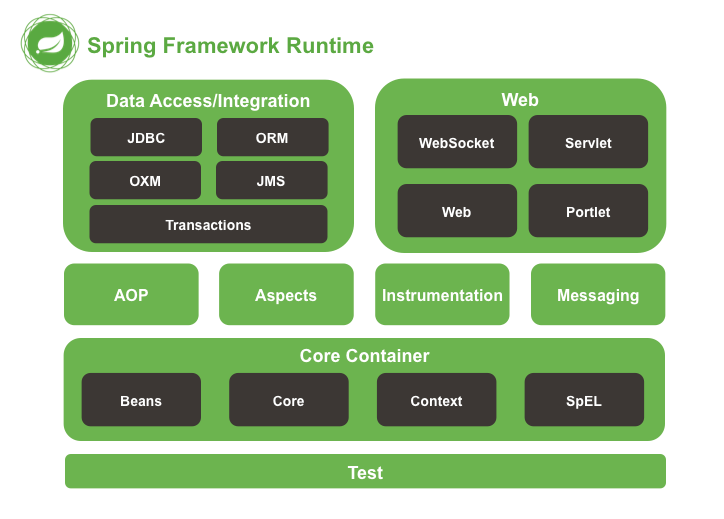
1. Overview
The core container turns configuration into objects. A bean is one of those objects. A BeanDefinition is the metadata for a bean, held before the instance exists. A BeanFactory is the registry that stores those definitions and later returns instances. An ApplicationContext is a BeanFactory that also loads resources, owns an Environment, and publishes events. The environment’s PropertySource list is where property values come from: system properties, environment variables, and later files declared with @PropertySource.
Bean
Beans are created with the configuration metadata that you supply to the container.
In the container, the bean definitions are represented as BeanDefinition objects, contains:
- class
- Name
- Scope
- Construct arguments
- Properties
- Autowiring mode
- Initialization method
- Destruction method
BeanDefinition
A BeanDefinition describes a bean instance, which has property values, constructor argument values.
This allow a BeanFactoryPostProcessor to introspect and modify property values and other bean metadata.
RootBeanDefinition represents the merged bean definition at runtime
interface BeanDefinition extends AttributeAccessor,BeanMetadataElement
interface AnnotatedBeanDefinition extends BeanDefinition {
    AnnotationMetadata getMetadata()
    MethodMetadata getFactoryMethodMetadata()
}
abstract class AbstractBeanDefinition implements BeanDefinition {
    Object beanClass
    String[] dependsOn
}
class GenericBeanDefinition extends AbstractBeanDefinition
class RootBeanDefinition extends AbstractBeanDefinition
BeanFactory
The root interface for accessing a spring bean container.
BeanFactory is a central registry of application components, and centralizes configuration components.
interface BeanFactory  {
    Object getBean(...)
}
interface ListableBeanFactory extends BeanFactory
interface HierarchicalBeanFactory extends BeanFactory
interface ConfigurableBeanFactory extends HierarchicalBeanFactory, SingletonBeanRegistry {
    void registerScope(String scopeName, Scope scope)
}
interface ConfigurableListableBeanFactory extends ListableBeanFactory, AutowireCapableBeanFactory, ConfigurableBeanFactory
class DefaultListableBeanFactory extends AbstractAutowireCapableBeanFactory implements ConfigurableListableBeanFactory, BeanDefinitionRegistry {
    Map<String, BeanDefinition> beanDefinitionMap
    Map<Class<?>, String[]> allBeanNamesByType
    Map<Class<?>, String[]> singletonBeanNamesByType
}

abstract class AbstractBeanFactory extends FactoryBeanRegistrySupport implements ConfigurableBeanFactory {
    BeanFactory parentBeanFactory
    List<BeanPostProcessor> beanPostProcessors
    Map<String, RootBeanDefinition> mergedBeanDefinitions
    Set<String> alreadyCreated
    Map<String, Scope> scopes

}

abstract class AbstractAutowireCapableBeanFactory extends AbstractBeanFactory implements AutowireCapableBeanFactory {
    InstantiationStrategy instantiationStrategy
}
Context
ApplicationContext central interface to provide configuration for an application
- Bean factory methods for accessing application components. Inherited from
ListableBeanFactory - The ability to load file resources. Inherited from
ResourceLoaderinterface. - The ability to publish events to registered listeners. Inherited from the
ApplicationEventPublisher
@startuml


interface AnnotationConfigRegistry << interface >>
interface ApplicationContext << interface >>
interface ApplicationEventPublisher << interface >>
interface BeanDefinitionRegistry << interface >>

interface ConfigurableApplicationContext extends ApplicationContext, Lifecycle
interface ConfigurableWebApplicationContext extends WebApplicationContext, ConfigurableApplicationContext

abstract class AbstractApplicationContext extends DefaultResourceLoader implements ConfigurableApplicationContext
class DefaultResourceLoader implements ResourceLoader
interface EnvironmentCapable << interface >>
class GenericApplicationContext extends AbstractApplicationContext implements BeanDefinitionRegistry {
    DefaultListableBeanFactory beanFactory
    ResourceLoader resourceLoader
}


class GenericWebApplicationContext extends GenericApplicationContext implements ConfigurableWebApplicationContext {
    ServletContext servletContext
}
interface Lifecycle << interface >>
interface ResourceLoader << interface >>
interface ResourcePatternResolver extends ResourceLoader


interface ApplicationContext extends EnvironmentCapable,MessageSource, ApplicationEventPublisher, ResourcePatternResolver

interface WebApplicationContext  extends ApplicationContext
class AnnotationConfigApplicationContext extends GenericApplicationContext implements AnnotationConfigRegistry {
    AnnotatedBeanDefinitionReader reader
    ClassPathBeanDefinitionScanner scanner
}

class AnnotatedBeanDefinitionReader
class ClassPathBeanDefinitionScanner

AnnotationConfigApplicationContext o-- AnnotatedBeanDefinitionReader
AnnotationConfigApplicationContext o-- ClassPathBeanDefinitionScanner

@enduml
Event
ApplicationListener can generically declare the event type that it is interested in. When registered with a Spring ApplicationContext, event will be filtered accordingly, with the listener getting invoked for matching event objects.
ApplicationListener beans are picked up by ClassPathBeanDefinitionScanner. AbstractApplicationContext.registerListeners registers them on the multicaster.
ApplicationEventMulticaster Interface to be implemented by objects that can manage a number of Applicationlistener objects and publish events to them.
SimpleApplicationEventMulticaster is the simple implementation of the ApplicationEventMulticaster interface.Multicasts all events to all registered listeners.
@startuml

!theme plain
top to bottom direction
skinparam linetype ortho

class ApplicationEvent {

}
interface ApplicationListener<E> << interface >> {
     void onApplicationEvent(E event)
}
interface EventListener << interface >>
interface ApplicationEventPublisher {
    void publishEvent(ApplicationEvent event)
}

interface ApplicationEventMulticaster {
    void addApplicationListener(ApplicationListener<?> listener)
    void addApplicationListenerBean(String listenerBeanName)
    void multicastEvent(ApplicationEvent event)
}

ApplicationListener  -[#595959,dashed]->  ApplicationEvent
ApplicationListener  -[#008200,plain]-^  EventListener
ApplicationEventPublisher --> ApplicationEventMulticaster: publish
ApplicationEventMulticaster --> ApplicationListener: multicast
ApplicationEventPublisher <|-- ApplicationContext
@enduml
title: SimpleApplicationEventMulticaster
@startuml

!theme plain
top to bottom direction
skinparam linetype ortho

class AbstractApplicationEventMulticaster {
    ClassLoader beanClassLoader
    ConfigurableBeanFactory beanFactory
    DefaultListenerRetriever defaultRetriever
}
interface ApplicationEventMulticaster << interface >> {
    void multicastEvent(ApplicationEvent event)
}
interface Aware << interface >>
interface BeanClassLoaderAware << interface >> {
    void setBeanClassLoader(ClassLoader classLoader)
}
interface BeanFactoryAware << interface >> {
    void setBeanFactory(BeanFactory beanFactory)
}
class SimpleApplicationEventMulticaster {
    Executor taskExecutor
}

class DefaultListenerRetriever {
    Set<ApplicationListener<?>> applicationListeners
    Set<String> applicationListenerBeans
}


AbstractApplicationEventMulticaster *-left- DefaultListenerRetriever

AbstractApplicationEventMulticaster  -[#008200,dashed]-^  ApplicationEventMulticaster
AbstractApplicationEventMulticaster  -[#008200,dashed]-^  BeanClassLoaderAware
AbstractApplicationEventMulticaster  -[#008200,dashed]-^  BeanFactoryAware
BeanClassLoaderAware                 -[#008200,plain]-^  Aware
BeanFactoryAware                     -[#008200,plain]-^  Aware
SimpleApplicationEventMulticaster    -[#000082,plain]-^  AbstractApplicationEventMulticaster
@enduml
Environment
Environment Interface is an abstraction in container that models 2 key aspects of application environment.
A profile is a named, logical group of bean definitions to be registered with the container only if the given profile is active
Properties play an important role in almost all applications and may originate from a variety of sources: properties files, JVM system properties, system environment variables, JNDI, servlet context parameters, ad-hoc Properties objects, Map objects, and so on
title: Environment
skinparam linetype ortho


' Declare interfaces
interface PropertyResolver <<interface>> {
    boolean containsProperty(String key)
    String getProperty(String key)
}
interface ConfigurablePropertyResolver <<interface>>
interface Environment <<interface>>
interface ConfigurableEnvironment <<interface>> {
    MutablePropertySources getPropertySources()
}
interface ConfigurableWebEnvironment <<interface>>
class MutablePropertySources {
    PropertySource<?> get(String name)
    void addFirst(PropertySource<?> propertySource)
    void addLast(PropertySource<?> propertySource)
    void addBefore(String relativePropertySourceName, PropertySource<?> propertySource)
    void addAfter(String relativePropertySourceName, PropertySource<?> propertySource)
    void replace(String name, PropertySource<?> propertySource)
    PropertySource<?> remove(String name)
}

' Declare classes
class AbstractEnvironment {
    Set<String> activeProfiles
    Set<String> defaultProfiles
    MutablePropertySources propertySources
    ConfigurablePropertyResolver propertyResolver
    MutablePropertySources getPropertySources()
    String getProperty(String key)
    protected void customizePropertySources(propertySources)
    protected ConfigurablePropertyResolver createPropertyResolver( propertySources)
}
class StandardEnvironment {
    protected void customizePropertySources(propertySources)
}
note "system properties system envs" as p1
StandardEnvironment .. p1
class StandardServletEnvironment {
    protected void customizePropertySources(propertySources)
}


' Define relationships with arrow pointing from class to interface (left to right)
PropertyResolver <|-- ConfigurablePropertyResolver
Environment <|-- ConfigurableEnvironment
PropertyResolver <|-- Environment
ConfigurablePropertyResolver<|-- ConfigurableEnvironment
ConfigurableEnvironment <|-- ConfigurableWebEnvironment
ConfigurableEnvironment <|-- AbstractEnvironment
AbstractEnvironment  <|-- StandardEnvironment
 StandardEnvironment  <-- StandardServletEnvironment
ConfigurableWebEnvironment  <|-- StandardServletEnvironment
AbstractEnvironment *-- MutablePropertySources
getPropertySources() returns the environment’s own MutablePropertySources, so adding to that list changes later lookups directly. The list is ordered: index 0 has the highest precedence, and getProperty returns the first non-null value.
// AbstractEnvironment.getPropertySources
public MutablePropertySources getPropertySources() {
    return this.propertySources;
}

// MutablePropertySources.get
public PropertySource<?> get(String name) {
    for (PropertySource<?> propertySource : this.propertySourceList) {
        if (propertySource.getName().equals(name)) {
            return propertySource;
        }
    }
    return null;
}

// MutablePropertySources.addFirst — highest precedence
public void addFirst(PropertySource<?> propertySource) {
    synchronized (this.propertySourceList) {
        removeIfPresent(propertySource); // same name moves, not duplicated
        this.propertySourceList.add(0, propertySource);
    }
}

// MutablePropertySources.addLast — lowest precedence
public void addLast(PropertySource<?> propertySource) {
    synchronized (this.propertySourceList) {
        removeIfPresent(propertySource);
        this.propertySourceList.add(propertySource);
    }
}

// MutablePropertySources.addBefore — just above the named source
public void addBefore(String relativePropertySourceName, PropertySource<?> propertySource) {
    synchronized (this.propertySourceList) {
        removeIfPresent(propertySource);
        int index = assertPresentAndGetIndex(relativePropertySourceName);
        addAtIndex(index, propertySource);
    }
}

// PropertySourcesPropertyResolver.getProperty — first source with the key wins
protected <T> T getProperty(String key, Class<T> targetValueType, boolean resolveNestedPlaceholders) {
    for (PropertySource<?> propertySource : this.propertySources) {
        Object value = propertySource.getProperty(key);
        if (value != null) {
            if (resolveNestedPlaceholders && value instanceof String string) {
                value = resolveNestedPlaceholders(string); // ${...}
            }
            return convertValueIfNecessary(value, targetValueType);
        }
    }
    return null;
}

// usage
ConfigurableEnvironment env = context.getEnvironment();
MutablePropertySources sources = env.getPropertySources();
sources.addFirst(new MapPropertySource("override", Map.of("app.timeout", "30")));
sources.addAfter("systemProperties", new PropertiesPropertySource("app", appProperties));
PropertySource<?> sys = sources.get("systemProperties");
String timeout = env.getProperty("app.timeout"); // "30", from "override"
PropertySource
PropertySource Abstract base class representing a source of name/value property pairs. The underlying source object may be of any type T that encapsulates properties.
Examples include java.util.Properties objects,java.uti.Map objects,ServletContext and Sevletconfig objects.
@startuml

skinparam linetype ortho

interface Iterable<PropertySource> << interface >>
class MutablePropertySources {
    List<PropertySource<?>> propertySourceList
}
interface PropertySources << interface >> {

    Stream<PropertySource<?>> stream()
    PropertySource<?> get(String name)

}

abstract class PropertySource<T> {
    String name;
    T source
    abstract Object getProperty(String name)
    T getSource()
}

PropertySources          -|> Iterable
MutablePropertySources  -|>  PropertySources
MutablePropertySources o--      PropertySource
@enduml
2. BeanDefinition loading
// AbstractApplicationContext.refresh — definitions first, singletons last
public void refresh() {
    prepareRefresh();                                          // Environment
    ConfigurableListableBeanFactory beanFactory = obtainFreshBeanFactory();
    prepareBeanFactory(beanFactory);
    postProcessBeanFactory(beanFactory);
    invokeBeanFactoryPostProcessors(beanFactory);              // getBeanFactoryPostProcessors()
    registerBeanPostProcessors(beanFactory);                   // register only
    finishBeanFactoryInitialization(beanFactory);              // create singletons
}
SpringFactoriesLoader
SpringFactoriesLoader reads META-INF/spring.factories from every jar. The key is a factory interface. The value is implementation class names. load instantiates that type’s implementations. CachedIntrospectionResults loads BeanInfoFactory this way.
@startuml
top to bottom direction

class SpringFactoriesLoader {
  FACTORIES_RESOURCE_LOCATION = "META-INF/spring.factories"
  factories : Map<String, List<String>>
  +load(factoryType) : List
  +loadFactories(factoryType, classLoader) : List
}

interface BeanInfoFactory
class StandardBeanInfoFactory
class ExtendedBeanInfoFactory
class SimpleBeanInfoFactory

SpringFactoriesLoader ..> BeanInfoFactory
BeanInfoFactory <|-- StandardBeanInfoFactory
StandardBeanInfoFactory <|-- ExtendedBeanInfoFactory
BeanInfoFactory <|-- SimpleBeanInfoFactory
@enduml
// SpringFactoriesLoader.loadFactories — usual entry
public static <T> List<T> loadFactories(Class<T> factoryType, ClassLoader classLoader) {
    return SpringFactoriesLoader.forDefaultResourceLocation(classLoader).load(factoryType);
}

// SpringFactoriesLoader.forResourceLocation — parse every jar, cache by class loader
public static SpringFactoriesLoader forResourceLocation(
        String resourceLocation, ClassLoader classLoader) {
    ClassLoader resourceClassLoader = (classLoader != null)
            ? classLoader : SpringFactoriesLoader.class.getClassLoader();
    Map<String, Factories> factoriesCache = cache.computeIfAbsent(
            resourceClassLoader, key -> new ConcurrentReferenceHashMap<>());
    Factories factories = factoriesCache.computeIfAbsent(resourceLocation,
            key -> new Factories(loadFactoriesResource(resourceClassLoader, resourceLocation)));
    return new SpringFactoriesLoader(classLoader, factories.byType());
}

// SpringFactoriesLoader.loadFactoriesResource — key = interface, value = impl names
protected static Map<String, List<String>> loadFactoriesResource(
        ClassLoader classLoader, String resourceLocation) {
    Map<String, List<String>> result = new LinkedHashMap<>();
    Enumeration<URL> urls = classLoader.getResources(resourceLocation); // META-INF/spring.factories
    while (urls.hasMoreElements()) {
        Properties properties = PropertiesLoaderUtils.loadProperties(new UrlResource(urls.nextElement()));
        properties.forEach((name, value) -> {
            String[] implementationNames = StringUtils.commaDelimitedListToStringArray((String) value);
            List<String> implementations = result.computeIfAbsent(((String) name).trim(), key -> new ArrayList<>());
            for (String implementationName : implementationNames) {
                implementations.add(implementationName.trim());
            }
        });
    }
    result.replaceAll(SpringFactoriesLoader::toDistinctUnmodifiableList); // drop duplicate class names
    return Collections.unmodifiableMap(result);
}

// SpringFactoriesLoader.load — names for this factory type, then one instance each
public <T> List<T> load(Class<T> factoryType, ArgumentResolver argumentResolver,
        FailureHandler failureHandler) {
    List<String> implementationNames = this.factories.getOrDefault(factoryType.getName(), Collections.emptyList());
    List<T> result = new ArrayList<>();
    for (String implementationName : implementationNames) {
        T factory = instantiateFactory(implementationName, factoryType, argumentResolver, failureHandler);
        if (factory != null) {
            result.add(factory);
        }
    }
    AnnotationAwareOrderComparator.sort(result);
    return result;
}

// SpringFactoriesLoader.instantiateFactory — Class.forName, then the resolvable constructor
protected <T> T instantiateFactory(String implementationName, Class<T> type,
        ArgumentResolver argumentResolver, FailureHandler failureHandler) {
    Class<?> implementationClass = ClassUtils.forName(implementationName, this.classLoader);
    // implementationClass must be assignable to type
    FactoryInstantiator<T> instantiator = FactoryInstantiator.forClass(implementationClass);
    return instantiator.instantiate(argumentResolver); // constructor.newInstance(resolved args)
}
BeanFactoryPostProcessor
A BeanFactoryPostProcessor changes bean definitions before any normal singleton is created. ConfigurationClassPostProcessor is the one that parses @Configuration classes.
@startuml
top to bottom direction
interface BeanFactoryPostProcessor {
  + postProcessBeanFactory(beanFactory : ConfigurableListableBeanFactory)
}
interface BeanDefinitionRegistryPostProcessor {
  + postProcessBeanDefinitionRegistry(registry : BeanDefinitionRegistry)
  + postProcessBeanFactory(beanFactory : ConfigurableListableBeanFactory)
}
class ConfigurationClassPostProcessor {
  - environment : Environment
  - resourceLoader : ResourceLoader
  - metadataReaderFactory : MetadataReaderFactory
  - registriesPostProcessed : Set<Integer>
  - factoriesPostProcessed : Set<Integer>
  - reader : ConfigurationClassBeanDefinitionReader
  - componentScanBeanNameGenerator : BeanNameGenerator
  - importBeanNameGenerator : BeanNameGenerator
  + getOrder() : int
  + postProcessBeanDefinitionRegistry(registry : BeanDefinitionRegistry)
  + postProcessBeanFactory(beanFactory : ConfigurableListableBeanFactory)
  + processConfigBeanDefinitions(registry : BeanDefinitionRegistry)
  + enhanceConfigurationClasses(beanFactory : ConfigurableListableBeanFactory)
}
BeanFactoryPostProcessor <|-- BeanDefinitionRegistryPostProcessor
BeanDefinitionRegistryPostProcessor <|-- ConfigurationClassPostProcessor
@enduml
invokeBeanFactoryPostProcessors does not walk the processors once. One processor may register another. getBeanNamesForType(..., allowEagerInit=false) only lists names. getBean creates the processor, so a lower-priority processor must not be created until every higher-priority processor has finished postProcessBeanDefinitionRegistry. processedBeans skips a name already run. PriorityOrdered extends Ordered, so that skip also keeps the first group out of the second pass.
Registry callback (postProcessBeanDefinitionRegistry):
- Instances from
addBeanFactoryPostProcessor, passed in bygetBeanFactoryPostProcessors(). Registry processors run now. Plain processors are saved.ConfigurationClassPostProcessoris not in this list. PriorityOrderedregistry beans.ConfigurationClassPostProcessorparses@Configurationhere.Orderedregistry beans, scanned again. SkipprocessedBeans.- Remaining registry beans, repeated until a scan finds none.
Factory callback (postProcessBeanFactory):
- Registry processors from steps 1–4, then the plain processors saved in step 1.
- Other
BeanFactoryPostProcessorbeans:PriorityOrdered, thenOrdered, then the rest. SkipprocessedBeans. clearMetadataCache().
// PostProcessorRegistrationDelegate.invokeBeanFactoryPostProcessors
// Several loops on purpose: a processor may register more processors.
// getBean() of an Ordered processor must not run before every PriorityOrdered
// processor has already called postProcessBeanDefinitionRegistry.
public static void invokeBeanFactoryPostProcessors(
        ConfigurableListableBeanFactory beanFactory, List<BeanFactoryPostProcessor> beanFactoryPostProcessors) {

    Set<String> processedBeans = new HashSet<>();

    if (beanFactory instanceof BeanDefinitionRegistry registry) {
        List<BeanFactoryPostProcessor> regularPostProcessors = new ArrayList<>();
        List<BeanDefinitionRegistryPostProcessor> registryProcessors = new ArrayList<>();

        // Loop 1 — getBeanFactoryPostProcessors(), filled by addBeanFactoryPostProcessor before refresh().
        // Not beans in the factory. Registry processors run now. Plain ones are saved.
        for (BeanFactoryPostProcessor postProcessor : beanFactoryPostProcessors) {
            if (postProcessor instanceof BeanDefinitionRegistryPostProcessor registryProcessor) {
                registryProcessor.postProcessBeanDefinitionRegistry(registry);
                registryProcessors.add(registryProcessor);
            }
            else {
                regularPostProcessors.add(postProcessor);
            }
        }

        // allowEagerInit=false: collect names without creating FactoryBeans.
        // Loop 2 — BeanDefinitionRegistryPostProcessor beans that implement PriorityOrdered.
        // ConfigurationClassPostProcessor is in this pass (PriorityOrdered, lowest order value).
        String[] postProcessorNames =
                beanFactory.getBeanNamesForType(BeanDefinitionRegistryPostProcessor.class, true, false);
        List<BeanDefinitionRegistryPostProcessor> current = new ArrayList<>();
        for (String ppName : postProcessorNames) {
            if (beanFactory.isTypeMatch(ppName, PriorityOrdered.class)) {
                current.add(beanFactory.getBean(ppName, BeanDefinitionRegistryPostProcessor.class));
                processedBeans.add(ppName);
            }
        }
        sortPostProcessors(current, beanFactory); // OrderComparator / dependency comparator
        registryProcessors.addAll(current);
        invokeBeanDefinitionRegistryPostProcessors(current, registry); // postProcessBeanDefinitionRegistry
        current.clear();

        // Loop 3 — rescan names. PriorityOrdered processors may have registered Ordered ones.
        // Skip names already in processedBeans. PriorityOrdered also implements Ordered, so the skip matters.
        postProcessorNames = beanFactory.getBeanNamesForType(BeanDefinitionRegistryPostProcessor.class, true, false);
        for (String ppName : postProcessorNames) {
            if (!processedBeans.contains(ppName) && beanFactory.isTypeMatch(ppName, Ordered.class)) {
                current.add(beanFactory.getBean(ppName, BeanDefinitionRegistryPostProcessor.class));
                processedBeans.add(ppName);
            }
        }
        sortPostProcessors(current, beanFactory);
        registryProcessors.addAll(current);
        invokeBeanDefinitionRegistryPostProcessors(current, registry);
        current.clear();

        // Loop 4 — while. Anything left, including processors registered by the previous iteration.
        // reiterate stays true when this scan found at least one new name.
        boolean reiterate = true;
        while (reiterate) {
            reiterate = false;
            postProcessorNames = beanFactory.getBeanNamesForType(BeanDefinitionRegistryPostProcessor.class, true, false);
            for (String ppName : postProcessorNames) {
                if (!processedBeans.contains(ppName)) {
                    current.add(beanFactory.getBean(ppName, BeanDefinitionRegistryPostProcessor.class));
                    processedBeans.add(ppName);
                    reiterate = true;
                }
            }
            sortPostProcessors(current, beanFactory);
            registryProcessors.addAll(current);
            invokeBeanDefinitionRegistryPostProcessors(current, registry);
            current.clear();
        }

        // Loop inside invokeBeanFactoryPostProcessors: postProcessBeanFactory, not the registry callback.
        // Registry processors first, then the plain ones saved in loop 1.
        invokeBeanFactoryPostProcessors(registryProcessors, beanFactory);
        invokeBeanFactoryPostProcessors(regularPostProcessors, beanFactory);
    }
    else {
        invokeBeanFactoryPostProcessors(beanFactoryPostProcessors, beanFactory);
    }

    // Loop 5 — every BeanFactoryPostProcessor name. Skip processedBeans (registry processors already ran both callbacks).
    // Split into three lists before any further getBean(), so Ordered beans are not created while sorting PriorityOrdered.
    String[] postProcessorNames = beanFactory.getBeanNamesForType(BeanFactoryPostProcessor.class, true, false);
    List<BeanFactoryPostProcessor> priorityOrderedPostProcessors = new ArrayList<>();
    List<String> orderedPostProcessorNames = new ArrayList<>();
    List<String> nonOrderedPostProcessorNames = new ArrayList<>();
    for (String ppName : postProcessorNames) {
        if (processedBeans.contains(ppName)) {
            // already ran postProcessBeanFactory above
        }
        else if (beanFactory.isTypeMatch(ppName, PriorityOrdered.class)) {
            priorityOrderedPostProcessors.add(beanFactory.getBean(ppName, BeanFactoryPostProcessor.class));
        }
        else if (beanFactory.isTypeMatch(ppName, Ordered.class)) {
            orderedPostProcessorNames.add(ppName); // name only
        }
        else {
            nonOrderedPostProcessorNames.add(ppName);
        }
    }

    // Loop 6 — postProcessBeanFactory for PriorityOrdered, then Ordered, then the rest.
    sortPostProcessors(priorityOrderedPostProcessors, beanFactory);
    invokeBeanFactoryPostProcessors(priorityOrderedPostProcessors, beanFactory);

    List<BeanFactoryPostProcessor> orderedPostProcessors = new ArrayList<>();
    for (String postProcessorName : orderedPostProcessorNames) {
        orderedPostProcessors.add(beanFactory.getBean(postProcessorName, BeanFactoryPostProcessor.class));
    }
    sortPostProcessors(orderedPostProcessors, beanFactory);
    invokeBeanFactoryPostProcessors(orderedPostProcessors, beanFactory);

    List<BeanFactoryPostProcessor> nonOrderedPostProcessors = new ArrayList<>();
    for (String postProcessorName : nonOrderedPostProcessorNames) {
        nonOrderedPostProcessors.add(beanFactory.getBean(postProcessorName, BeanFactoryPostProcessor.class));
    }
    invokeBeanFactoryPostProcessors(nonOrderedPostProcessors, beanFactory);

    beanFactory.clearMetadataCache(); // definitions may have changed placeholders
}

// ConfigurationClassPostProcessor.postProcessBeanDefinitionRegistry
public void postProcessBeanDefinitionRegistry(BeanDefinitionRegistry registry) {
    processConfigBeanDefinitions(registry); // parse @Configuration, register BeanDefinitions
}

// AbstractApplicationContext.registerBeanPostProcessors — register only, do not create singletons
protected void registerBeanPostProcessors(ConfigurableListableBeanFactory beanFactory) {
    PostProcessorRegistrationDelegate.registerBeanPostProcessors(beanFactory, this);
}
Configuration processing
ConfigurationClassParser.doProcessConfigurationClass walks one configuration class in this order. A @Bean method is not registered yet. The parser stores it as a BeanMethod on the ConfigurationClass.
ConfigurationClassBeanDefinitionReader runs after parse returns. loadBeanDefinitions walks those BeanMethods. loadBeanDefinitionsForBeanMethod builds a ConfigurationClassBeanDefinition whose factory method is that @Bean method, then BeanDefinitionRegistry.registerBeanDefinition stores it.
@Import is handled in processImports, not as a BeanMethod. An ImportSelector returns class names and processImports runs again. An ImportBeanDefinitionRegistrar is kept on the ConfigurationClass and invoked later by loadBeanDefinitionsFromImportBeanDefinitionRegistrars. Any other imported class is parsed as another ConfigurationClass, and registerBeanDefinitionForImportedConfigurationClass registers that class itself.
A DeferredImportSelector is not expanded in that call. The parser stores it until every configuration class in this pass has been parsed, then runs selectImports and parses the returned classes. Selectors that share a Group are collected first and selected together. Auto-configuration can use this path so its imports run after the application’s configuration classes.
// ConfigurationClassPostProcessor.postProcessBeanDefinitionRegistry
public void postProcessBeanDefinitionRegistry(BeanDefinitionRegistry registry) {
    this.registriesPostProcessed.add(System.identityHashCode(registry)); // run once per registry
    processConfigBeanDefinitions(registry);
}

// ConfigurationClassPostProcessor.processConfigBeanDefinitions
public void processConfigBeanDefinitions(BeanDefinitionRegistry registry) {
    List<BeanDefinitionHolder> configCandidates = new ArrayList<>();
    String[] candidateNames = registry.getBeanDefinitionNames();
    for (String beanName : candidateNames) {
        BeanDefinition beanDef = registry.getBeanDefinition(beanName);
        if (ConfigurationClassUtils.checkConfigurationClassCandidate(beanDef, this.metadataReaderFactory)) {
            configCandidates.add(new BeanDefinitionHolder(beanDef, beanName)); // @Configuration, @Component, ...
        }
    }
    configCandidates.sort(...); // @Order

    ConfigurationClassParser parser = new ConfigurationClassParser(
            this.metadataReaderFactory, this.problemReporter, this.environment,
            this.resourceLoader, this.componentScanBeanNameGenerator, registry);
    Set<BeanDefinitionHolder> candidates = new LinkedHashSet<>(configCandidates);
    Set<ConfigurationClass> alreadyParsed = new HashSet<>();
    do {
        parser.parse(candidates);   // ConfigurationClassParser: BeanMethod, imports, scan
        parser.validate();
        Set<ConfigurationClass> configClasses = new LinkedHashSet<>(parser.getConfigurationClasses());
        configClasses.removeAll(alreadyParsed);
        this.reader.loadBeanDefinitions(configClasses); // ConfigurationClassBeanDefinitionReader: register
        alreadyParsed.addAll(configClasses);

        candidates.clear();
        // new definitions not parsed yet (e.g. from a registrar) become the next candidates
    }
    while (!candidates.isEmpty());
}

// ConfigurationClassParser.parse
public void parse(Set<BeanDefinitionHolder> configCandidates) {
    for (BeanDefinitionHolder holder : configCandidates) {
        BeanDefinition bd = holder.getBeanDefinition();
        if (bd instanceof AnnotatedBeanDefinition annotatedBeanDef) {
            parse(annotatedBeanDef, holder.getBeanName());
        }
        else if (bd instanceof AbstractBeanDefinition abstractBeanDef && abstractBeanDef.hasBeanClass()) {
            parse(abstractBeanDef.getBeanClass(), holder.getBeanName());
        }
        else {
            parse(bd.getBeanClassName(), holder.getBeanName());
        }
    }
    this.deferredImportSelectorHandler.process(); // DeferredImportSelector after this pass
}

// ConfigurationClassParser.parse
private ConfigurationClass parse(AnnotatedBeanDefinition beanDef, String beanName) {
    ConfigurationClass configClass = new ConfigurationClass(
            beanDef.getMetadata(), beanName, (beanDef instanceof ScannedGenericBeanDefinition));
    processConfigurationClass(configClass, DEFAULT_EXCLUSION_FILTER);
    return configClass;
}

// ConfigurationClassParser.parse
private ConfigurationClass parse(Class<?> clazz, String beanName) {
    ConfigurationClass configClass = new ConfigurationClass(clazz, beanName);
    processConfigurationClass(configClass, DEFAULT_EXCLUSION_FILTER);
    return configClass;
}

// ConfigurationClassParser.parse
ConfigurationClass parse(String className, String beanName) {
    MetadataReader reader = this.metadataReaderFactory.getMetadataReader(className);
    ConfigurationClass configClass = new ConfigurationClass(reader, beanName);
    processConfigurationClass(configClass, DEFAULT_EXCLUSION_FILTER);
    return configClass;
}

// ConfigurationClassParser.processConfigurationClass
protected void processConfigurationClass(ConfigurationClass configClass, Predicate<String> filter) {
    SourceClass sourceClass = asSourceClass(configClass, filter);
    do {
        sourceClass = doProcessConfigurationClass(configClass, sourceClass, filter);
    }
    while (sourceClass != null); // once per class in the superclass chain
    this.configurationClasses.put(configClass, configClass);
}

// ConfigurationClassParser.doProcessConfigurationClass
protected SourceClass doProcessConfigurationClass(
        ConfigurationClass configClass, SourceClass sourceClass, Predicate<String> filter) {
    processMemberClasses(configClass, sourceClass, filter);          // nested classes
    propertySourceRegistry.processPropertySource(propertySource);    // @PropertySource
    for (AnnotationAttributes componentScan : componentScans) {      // @ComponentScan → BeanDefinitions
        Set<BeanDefinitionHolder> scannedBeanDefinitions =
                this.componentScanParser.parse(componentScan, sourceClass.getMetadata().getClassName());
        for (BeanDefinitionHolder holder : scannedBeanDefinitions) {
            BeanDefinition bdCand = holder.getBeanDefinition().getOriginatingBeanDefinition();
            if (bdCand == null) {
                bdCand = holder.getBeanDefinition();
            }
            if (ConfigurationClassUtils.checkConfigurationClassCandidate(bdCand, this.metadataReaderFactory)) {
                parse(bdCand.getBeanClassName(), holder.getBeanName()); // step into parse(String, String)
            }
        }
    }
    processImports(configClass, sourceClass, getImports(sourceClass), filter, true); // @Import
    configClass.addImportedResource(resolvedResource, readerClass);  // @ImportResource
    configClass.addBeanMethod(new BeanMethod(methodMetadata, configClass)); // @Bean
    processInterfaces(configClass, sourceClass);
    return superclass; // continue with the superclass
}

// ConfigurationClassParser.processImports
private void processImports(ConfigurationClass configClass, SourceClass currentSourceClass,
        Collection<SourceClass> importCandidates, Predicate<String> filter, boolean checkForCircularImports) {
    for (SourceClass candidate : importCandidates) {
        if (candidate.isAssignable(ImportSelector.class)) {
            ImportSelector selector = ParserStrategyUtils.instantiateClass(candidate.loadClass(),
                    ImportSelector.class, this.environment, this.resourceLoader, this.registry);
            if (selector instanceof DeferredImportSelector deferredImportSelector) {
                this.deferredImportSelectorHandler.handle(configClass, deferredImportSelector); // store, do not select yet
            }
            else {
                String[] importClassNames = selector.selectImports(currentSourceClass.getMetadata());
                processImports(configClass, currentSourceClass, asSourceClasses(importClassNames, filter), filter, false);
            }
        }
        else if (candidate.isAssignable(ImportBeanDefinitionRegistrar.class)) {
            ImportBeanDefinitionRegistrar registrar = ParserStrategyUtils.instantiateClass(candidate.loadClass(),
                    ImportBeanDefinitionRegistrar.class, this.environment, this.resourceLoader, this.registry);
            configClass.addImportBeanDefinitionRegistrar(registrar, currentSourceClass.getMetadata());
        }
        else {
            processConfigurationClass(candidate.asConfigClass(configClass), filter); // imported @Configuration
        }
    }
}

// ConfigurationClassParser.DeferredImportSelectorHandler
void handle(ConfigurationClass configClass, DeferredImportSelector importSelector) {
    this.deferredImportSelectors.add(new DeferredImportSelectorHolder(configClass, importSelector));
}

// ConfigurationClassParser.DeferredImportSelectorHandler
void process() {
    List<DeferredImportSelectorHolder> deferredImports = this.deferredImportSelectors;
    deferredImports.sort(DEFERRED_IMPORT_COMPARATOR);
    DeferredImportSelectorGroupingHandler handler = new DeferredImportSelectorGroupingHandler();
    deferredImports.forEach(handler::register); // selectors that share a Group go into one grouping
    handler.processGroupImports();
}

// ConfigurationClassParser.DeferredImportSelectorGrouping
Iterable<Group.Entry> getImports() {
    for (DeferredImportSelectorHolder deferredImport : this.deferredImports) {
        this.group.process(deferredImport.getConfigurationClass().getMetadata(),
                deferredImport.getImportSelector()); // default group calls selectImports
    }
    return this.group.selectImports();
}

// ConfigurationClassParser.DeferredImportSelectorGroupingHandler
void processGroupImports() {
    for (DeferredImportSelectorGrouping grouping : this.groupings.values()) {
        Predicate<String> filter = grouping.getCandidateFilter();
        for (Group.Entry entry : grouping.getImports()) {
            ConfigurationClass configurationClass = this.configurationClasses.get(entry.getMetadata());
            processImports(configurationClass, asSourceClass(configurationClass, filter),
                    Collections.singleton(asSourceClass(entry.getImportClassName(), filter)), filter, false);
        }
    }
}
ClassPathBeanDefinitionScanner.doScan registers candidates annotated with @Component, @Repository, @Service, or @Controller, and creates a scoped proxy when @Scope asks for one.
@startuml
top to bottom direction

interface BeanDefinition
interface AnnotatedBeanDefinition
class AbstractBeanDefinition
class RootBeanDefinition
class ConfigurationClassBeanDefinition {
  - annotationMetadata : ...
  - factoryMethodMetadata : ...
  - localBeanName : ...
}
interface BeanDefinitionRegistry {
  + registerBeanDefinition(...)
}

BeanDefinition <|-- AnnotatedBeanDefinition
BeanDefinition <|-- AbstractBeanDefinition
AbstractBeanDefinition <|-- RootBeanDefinition
RootBeanDefinition <|-- ConfigurationClassBeanDefinition
AnnotatedBeanDefinition <|.. ConfigurationClassBeanDefinition
ConfigurationClassBeanDefinition -[hidden]down- ConfigurationClassPostProcessor

interface ImportSelector {
  + selectImports(...) : String[]
}
interface DeferredImportSelector
interface ImportBeanDefinitionRegistrar {
  + registerBeanDefinitions(...)
}
ImportSelector <|-- DeferredImportSelector

class ClassPathScanningCandidateComponentProvider
class ClassPathBeanDefinitionScanner {
  - registry : ...
  # doScan(...) : Set<BeanDefinitionHolder>
}
ClassPathScanningCandidateComponentProvider <|--- ClassPathBeanDefinitionScanner

interface BeanFactoryPostProcessor
interface BeanDefinitionRegistryPostProcessor
interface Ordered
interface PriorityOrdered
BeanFactoryPostProcessor <|-- BeanDefinitionRegistryPostProcessor
Ordered <|-- PriorityOrdered

class ConfigurationClassPostProcessor {
  - reader : ...
  + processConfigBeanDefinitions(...)
}
BeanDefinitionRegistryPostProcessor <|-- ConfigurationClassPostProcessor
PriorityOrdered <|-- ConfigurationClassPostProcessor
class ConfigurationClassParser {
  - configurationClasses : ...
  - deferredImportSelectorHandler : ...
  + parse(...)
  # doProcessConfigurationClass(...) : SourceClass
  - processImports(...)
}
class ConfigurationClassBeanDefinitionReader {
  - registry : ...
  + loadBeanDefinitions(...)
  - loadBeanDefinitionsForBeanMethod(...)
  - registerBeanDefinitionForImportedConfigurationClass(...)
  - loadBeanDefinitionsFromImportBeanDefinitionRegistrars(...)
}
class ConfigurationClass {
  - metadata : ...
  - beanName : ...
  - beanMethods : ...
  - importBeanDefinitionRegistrars : ...
}
class BeanMethod {
  - configurationClass : ...
  - metadata : ...
}
class ComponentScanAnnotationParser {
  + parse(...) : Set<BeanDefinitionHolder>
}

ConfigurationClassPostProcessor --> ConfigurationClassParser
ConfigurationClassPostProcessor --> ConfigurationClassBeanDefinitionReader : reader
ConfigurationClassParser --> ConfigurationClass : addBeanMethod
ConfigurationClass *-- BeanMethod : beanMethods
ConfigurationClassBeanDefinitionReader --> BeanMethod : loadBeanDefinitionsForBeanMethod
ConfigurationClassBeanDefinitionReader --> ConfigurationClassBeanDefinition : new
ConfigurationClassParser --> ImportSelector : processImports
ConfigurationClassParser --> DeferredImportSelector : processImports
ConfigurationClassParser --> ImportBeanDefinitionRegistrar : addImportBeanDefinitionRegistrar
ConfigurationClassParser --> ConfigurationClass : imported class
ConfigurationClassBeanDefinitionReader --> ImportBeanDefinitionRegistrar : loadBeanDefinitionsFromImportBeanDefinitionRegistrars
ConfigurationClassBeanDefinitionReader --> BeanDefinitionRegistry : registerBeanDefinition
ConfigurationClassParser --> ComponentScanAnnotationParser
ComponentScanAnnotationParser --> ClassPathBeanDefinitionScanner
ClassPathBeanDefinitionScanner --> BeanDefinitionRegistry : doScan
@enduml
Environment and property sources
// AbstractApplicationContext.getEnvironment — create once
public ConfigurableEnvironment getEnvironment() {
    if (this.environment == null) {
        this.environment = createEnvironment(); // StandardEnvironment, web: StandardServletEnvironment
    }
    return this.environment;
}

// AbstractEnvironment constructor
protected AbstractEnvironment(MutablePropertySources propertySources) {
    this.propertySources = propertySources;
    this.propertyResolver = createPropertyResolver(propertySources);
    customizePropertySources(propertySources);
}

// StandardEnvironment.customizePropertySources — first match wins on later lookup
protected void customizePropertySources(MutablePropertySources propertySources) {
    propertySources.addLast(new PropertiesPropertySource("systemProperties", getSystemProperties()));
    propertySources.addLast(new SystemEnvironmentPropertySource("systemEnvironment", getSystemEnvironment()));
}

// StandardServletEnvironment.customizePropertySources — stubs replaced in prepareRefresh
protected void customizePropertySources(MutablePropertySources propertySources) {
    propertySources.addLast(new StubPropertySource("servletConfigInitParams"));
    propertySources.addLast(new StubPropertySource("servletContextInitParams"));
    super.customizePropertySources(propertySources);
}

// AbstractRefreshableWebApplicationContext.initPropertySources
protected void initPropertySources() {
    ((ConfigurableWebEnvironment) getEnvironment()).initPropertySources(this.servletContext, this.servletConfig);
}

// AbstractApplicationContext.prepareBeanFactory
beanFactory.registerSingleton("environment", getEnvironment());
// ${...} in definitions: Environment.resolvePlaceholders
// @PropertySource is added later by ConfigurationClassParser, not here
3. Bean loading
A non-lazy singleton is created in preInstantiateSingletons → getBean → createBean. FactoryBean and scope change what getBean returns.
Lifecycle
// AbstractAutowireCapableBeanFactory.initializeBean
protected Object initializeBean(String beanName, Object bean, RootBeanDefinition mbd) {
    invokeAwareMethods(beanName, bean); // BeanNameAware, BeanClassLoaderAware, BeanFactoryAware
    wrappedBean = applyBeanPostProcessorsBeforeInitialization(wrappedBean, beanName);
    invokeInitMethods(beanName, wrappedBean, mbd); // InitializingBean.afterPropertiesSet, then init-method
    wrappedBean = applyBeanPostProcessorsAfterInitialization(wrappedBean, beanName);
    return wrappedBean;
}

// ApplicationContextAwareProcessor sets EnvironmentAware, EmbeddedValueResolverAware,
// ResourceLoaderAware, ApplicationEventPublisherAware, MessageSourceAware,
// ApplicationContextAware, ServletContextAware before the BeanPostProcessor loop above.

// DisposableBeanAdapter.destroy — shutdown
postProcessBeforeDestruction(); // DestructionAwareBeanPostProcessor
((DisposableBean) bean).destroy();
invokeCustomDestroyMethod();    // destroy-method
createBean
// DefaultListableBeanFactory.preInstantiateSingletons
public void preInstantiateSingletons() {
    for (String beanName : beanNames) {
        if (isSingleton && !isLazy) {
            getBean(beanName);
        }
    }
}

// AbstractAutowireCapableBeanFactory.createBean
protected Object createBean(String beanName, RootBeanDefinition mbd, Object[] args) {
    resolveBeanClass(mbd, beanName);
    Object early = resolveBeforeInstantiation(beanName, mbd); // InstantiationAwareBeanPostProcessor may return a proxy
    if (early != null) {
        return early;
    }
    Object beanInstance = doCreateBean(beanName, mbd, args);
    return beanInstance;
}

// AbstractAutowireCapableBeanFactory.doCreateBean
protected Object doCreateBean(String beanName, RootBeanDefinition mbd, Object[] args) {
    instanceWrapper = createBeanInstance(beanName, mbd, args); // supplier, @Bean factory method, or constructor
    applyMergedBeanDefinitionPostProcessors(mbd, beanType, beanName); // @Autowired metadata
    populateBean(beanName, mbd, instanceWrapper);
    exposedObject = initializeBean(beanName, exposedObject, mbd);
    registerDisposableBeanIfNecessary(beanName, bean, mbd);
    return exposedObject;
}

// FactoryBean: getBean("name") calls FactoryBean.getObject(); getBean("&name") returns the factory.
// A lazy-init definition stays uncreated until getBean.
BeanPostProcessor
Factory hook that allows for custom modification of new bean instances
interface BeanPostProcessor {
+ Object postProcessBeforeInitialization(Object,String)
+ Object postProcessAfterInitialization(Object,String)
}

interface MergedBeanDefinitionPostProcessor extends BeanPostProcessor  {
    void postProcessMergedBeanDefinition()
}
interface InstantiationAwareBeanPostProcessor extends BeanPostProcessor {
    default Object postProcessBeforeInstantiation(Class<?> beanClass, String beanName)
    default boolean postProcessAfterInstantiation(Object bean, String beanName)
    default PropertyValues postProcessProperties()
}
interface SmartInstantiationAwareBeanPostProcessor extends InstantiationAwareBeanPostProcessor
class AutowiredAnnotationBeanPostProcessor implements SmartInstantiationAwareBeanPostProcessor ,MergedBeanDefinitionPostProcessor
AutowiredAnnotationBeanPostProcessor
BeanPostProcessor implementation that autowires annotated fields,setter methods, and arbitrary config methods. Members to be injected are detected through annotations @Autowired and @Value
Scope
Strategy interface used by ConfigurableBeanFactory representing a target scope to hold bean instances in. common scope
- singleton
- prototype
- request
- session
interface Scope {
    Object get(String name, ObjectFactory<?> objectFactory)
    Object remove(String name)
}
FactoryBean
Interface to be implemented by objects used within a BeanFactory which are themselves factories for individual objects.
A bean that implements this interface cannot be used as normal bean.
The container stores the FactoryBean. A normal lookup does not return that object: getBean(name) calls FactoryBean.getObject() and returns the product. Prefix the name with & to obtain the factory itself (BeanFactory.FACTORY_BEAN_PREFIX).
public class Client {
    private final String endpoint;
    public Client(String endpoint) { this.endpoint = endpoint; }
    public String endpoint() { return endpoint; }
}

public class ClientFactoryBean implements FactoryBean<Client> {
    private String endpoint;

    public void setEndpoint(String endpoint) { this.endpoint = endpoint; }

    @Override
    public Client getObject() {
        return new Client(endpoint);
    }

    @Override
    public Class<?> getObjectType() {
        return Client.class;
    }

    @Override
    public boolean isSingleton() {
        return true; // container caches getObject() for this name
    }
}
@Configuration
public class AppConfig {
    @Bean
    public ClientFactoryBean client() {
        ClientFactoryBean factory = new ClientFactoryBean();
        factory.setEndpoint("https://api.example.com");
        return factory;
    }
}
ApplicationContext ctx = new AnnotationConfigApplicationContext(AppConfig.class);

Client product = ctx.getBean("client", Client.class);
// product.endpoint() == "https://api.example.com"
// type is Client, not ClientFactoryBean

ClientFactoryBean factory = (ClientFactoryBean) ctx.getBean("&client");
// the FactoryBean instance registered under the name "client"
isSingleton() == true means later getBean("client") calls reuse the same Client. isSingleton() == false makes getObject() run on each lookup. Dependents that declare Client receive the product; dependents that declare ClientFactoryBean receive the factory.