
Sentinel: flow control internals
Sentinel is Alibaba’s library for flow control, concurrency limiting, circuit breaking, and system protection. An application protects a named resource by entering it through SphU.entry. A processor slot chain records statistics for that resource and applies the rules loaded at runtime.
1. Overview
A resource is a string chosen by the caller: an HTTP path, a service method, or any other name. SphU.entry(resourceName) opens the resource and entry.exit() closes it. Between those two calls, Sentinel runs a ProcessorSlotChain built once per resource.
Each slot has one job. StatisticSlot maintains counters. FlowSlot applies flow rules. Other slots apply authority rules, system rules, and circuit-breaking rules. Rules live in managers such as FlowRuleManager and can be replaced without restarting the process.
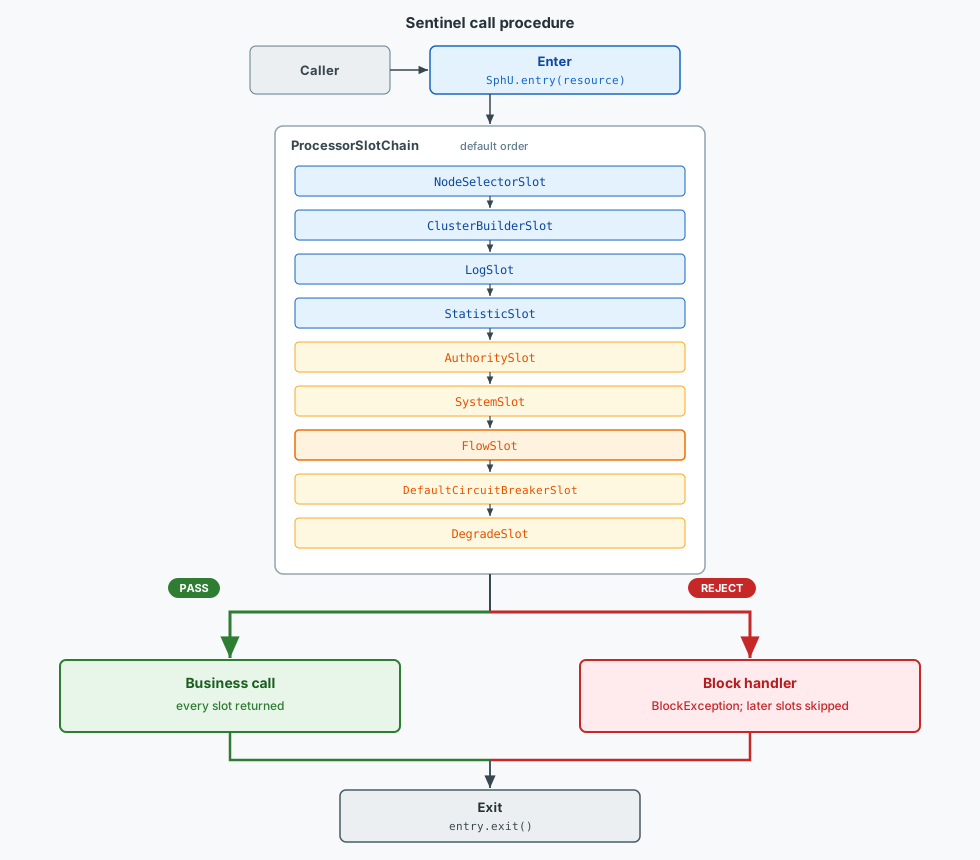
A rejected call never reaches the business method. entry.exit() still runs on both paths.
In a Spring application the usual entry is spring-cloud-starter-alibaba-sentinel. The starter registers SentinelResourceAspect, which wraps methods annotated with @SentinelResource. The annotation value is the resource name. On BlockException the aspect calls the blockHandler method instead of the business method.
@RestController
public class OrderController {

    @GetMapping("/api/order")
    @SentinelResource(value = "getOrder", blockHandler = "handleBlock")
    public Order getOrder(@RequestParam Long id) {
        return orderService.find(id);
    }

    public Order handleBlock(Long id, BlockException ex) {
        throw new ResponseStatusException(HttpStatus.TOO_MANY_REQUESTS);
    }
}
handleBlock must be on the same class and must repeat the business parameters, with BlockException added at the end. The aspect turns that annotation into the same entry the core API uses:
entry = SphU.entry("getOrder", resourceType, entryType, args);
return pjp.proceed();
A rule loaded for the resource getOrder therefore applies to OrderController.getOrder. The HTTP path and the resource name are independent: the web interceptor, when enabled, protects the URL under its own resource name.
2. ProcessorSlotChain
The slot chain applies rules to one open resource call. Before it runs, Sentinel needs a Context and an Entry.
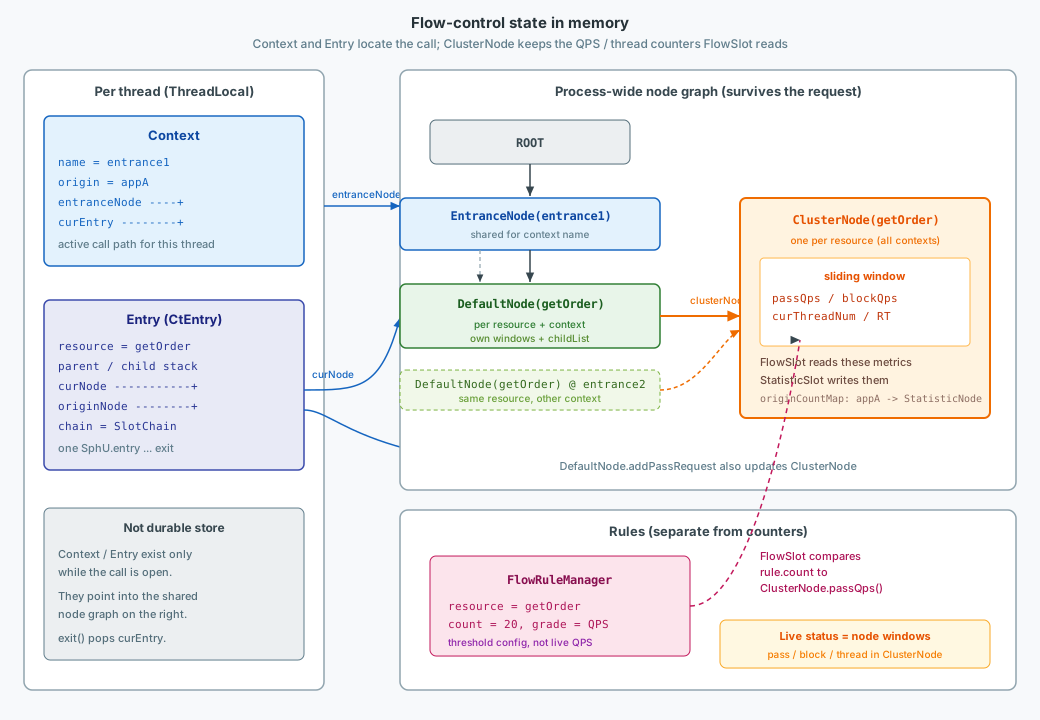
Context marks the entrance of the current thread’s call path. The same resource under two entrances is counted separately, and chain-mode flow rules match the context name. The context may also carry an origin so authority rules and origin metrics can distinguish callers. It is stored in a ThreadLocal. If the application does not call ContextUtil.enter, CtSph opens the default context.
Entry marks one SphU.entry … exit pair for a resource. It binds that call to its statistic nodes and to the slot chain used on exit. Nested entries form a stack inside the context; curEntry is the innermost open call.
The live flow-control status is not stored on the request object. It lives in process memory on Node sliding windows. A thread-local Context and the current Entry only point into that graph for the open call. The call tree holds per-context **DefaultNode**s; all contexts of the same resource share one ClusterNode, where passQps, blockQps, and thread count accumulate. FlowSlot compares those metrics to FlowRule thresholds from FlowRuleManager. When the entry exits, the context stack is unwound; the ClusterNode windows remain for later calls.
@startuml
class ContextUtil {
  {static} -contextHolder : ThreadLocal<Context>
  {static} -contextNameNodeMap : Map<String, DefaultNode>
  {static} +enter()
  {static} +trueEnter()
  {static} +exit()
  {static} -initDefaultContext()
}

class Context {
  -name : String
  -entranceNode : DefaultNode
  -curEntry : Entry
  -origin : String
  +setCurEntry()
  +getCurEntry()
  +setCurNode()
  +getCurNode()
  +getLastNode()
}

interface Node {
  +passQps()
}

interface ProcessorSlot {
  +entry()
  +exit()
}

class Entry {
  -curNode : Node
  -originNode : Node
  -resourceWrapper : ResourceWrapper
  +setCurNode()
  +getCurNode()
  +exit()
}

class CtEntry {
  -parent : Entry
  -child : Entry
  -chain : ProcessorSlot
  -context : Context
  +exit()
  +getLastNode()
}

class DefaultNode {
  -childList : Set<Node>
  +addChild()
}

class EntranceNode

abstract class ResourceWrapper {
  #name : String
}

class Constants {
  {static} +ROOT : DefaultNode
  {static} +CONTEXT_DEFAULT_NAME : String
}

class CtSph {
  +entryWithPriority()
  -lookProcessChain()
}

class ProcessorSlotChain {
  +entry()
  +exit()
}

Entry <|-- CtEntry
DefaultNode <|-- EntranceNode
ProcessorSlot <|-- ProcessorSlotChain
ContextUtil --> Context : contextHolder
ContextUtil o--> EntranceNode : contextNameNodeMap
Context --> DefaultNode : entranceNode
Context --> Entry : curEntry
CtEntry --> Entry : parent / child
CtEntry --> ProcessorSlot : chain
Entry --> Node : curNode / originNode
Entry --> ResourceWrapper : resourceWrapper
Constants --> DefaultNode : ROOT
DefaultNode o--> DefaultNode : childList
CtSph ..> ContextUtil : internalEnter / getContext
CtSph --> CtEntry : new
CtSph --> ProcessorSlotChain : lookProcessChain
@enduml
From class load to an open entry, the process mutates that graph in four steps.
Step 1 — Default entrance at class load. ContextUtil static init calls initDefaultContext: create EntranceNode(sentinel_default_context), attach it under Constants.ROOT, register it in contextNameNodeMap.
private static void initDefaultContext() {
    String defaultContextName = Constants.CONTEXT_DEFAULT_NAME;
    EntranceNode node = new EntranceNode(
        new StringResourceWrapper(defaultContextName, EntryType.IN), null);
    Constants.ROOT.addChild(node);
    contextNameNodeMap.put(defaultContextName, node);
}
State after step 1:
ROOT
 └── EntranceNode(sentinel_default_context)   // also in contextNameNodeMap
ThreadLocal contextHolder: empty
Step 2 — Create the thread Context. Explicit ContextUtil.enter(name, origin) (custom name) or, on first SphU.entry with no context, InternalContextUtil.internalEnter(CONTEXT_DEFAULT_NAME). Both reach trueEnter. If contextHolder is empty, resolve or create the EntranceNode for the name (still under ROOT, capped by MAX_CONTEXT_NAME_SIZE), then bind a new Context:
protected static Context trueEnter(String name, String origin) {
    Context context = contextHolder.get();
    if (context == null) {
        DefaultNode node = contextNameNodeMap.get(name);
        // or create EntranceNode + ROOT.addChild under lock
        context = new Context(node, name);
        context.setOrigin(origin);
        contextHolder.set(context);
    }
    return context;
}
State after step 2 (default path, empty origin):
contextHolder → Context {
  name          = sentinel_default_context
  entranceNode  = EntranceNode(sentinel_default_context)
  origin        = ""
  curEntry      = null
}
Step 3 — Resolve the slot chain. CtSph.entryWithPriority loads or builds the ProcessorSlotChain for the resource (cached per ResourceWrapper, up to MAX_SLOT_CHAIN_SIZE):
private Entry entryWithPriority(ResourceWrapper resourceWrapper, int count,
                                boolean prioritized, Object... args)
        throws BlockException {
    Context context = ContextUtil.getContext();
    if (context == null) {
        context = InternalContextUtil.internalEnter(Constants.CONTEXT_DEFAULT_NAME);
    }
    ProcessorSlot<Object> chain = lookProcessChain(resourceWrapper);
    // ...
}
State after step 3: context unchanged; chain is the linked slot list for this resource (or null if the chain cache is full — then no rule checking).
Step 4 — Create CtEntry and push it onto the context. Construction runs setUpEntryFor: link parent / child, then replace curEntry. Only after that does chain.entry run (slots then set curNode / originNode).
CtEntry(ResourceWrapper resourceWrapper, ProcessorSlot<Object> chain,
        Context context, int count, Object[] args) {
    super(resourceWrapper, count, args);
    this.chain = chain;
    this.context = context;
    setUpEntryFor(context);
}

private void setUpEntryFor(Context context) {
    if (context instanceof NullContext) {
        return;
    }
    this.parent = context.getCurEntry();
    if (parent != null) {
        ((CtEntry) parent).child = this;
    }
    context.setCurEntry(this);
}
Entry e = new CtEntry(resourceWrapper, chain, context, count, args);
try {
    chain.entry(context, resourceWrapper, null, count, prioritized, args);
} catch (BlockException e1) {
    e.exit(count, args);
    throw e1;
}
State after step 4 (first entry in the context, before slots finish):
context.curEntry → CtEntry e1 {
  parent = null
  child  = null
  chain  = ProcessorSlotChain(resource)
  curNode / originNode = null   // set later by NodeSelector / ClusterBuilder
}
A second nested SphU.entry repeats step 4: e1.child = e2, e2.parent = e1, context.curEntry = e2. On e2.exit(), the chain’s exit runs, then curEntry returns to e1.
The slot list that chain.entry walks is built as follows.
@startuml
interface ProcessorSlot {
  entry()
  fireEntry()
  exit()
  fireExit()
}

abstract class AbstractLinkedProcessorSlot {
  next
  fireEntry()
  fireExit()
}

abstract class ProcessorSlotChain {
  addFirst()
  addLast()
}

class DefaultProcessorSlotChain {
  first
  end
  entry()
  exit()
}

interface SlotChainBuilder {
  build()
}

class DefaultSlotChainBuilder {
  build()
}

class NodeSelectorSlot
class ClusterBuilderSlot
class LogSlot
class StatisticSlot
class AuthoritySlot
class SystemSlot
class FlowSlot
class DefaultCircuitBreakerSlot
class DegradeSlot

ProcessorSlot <|.. AbstractLinkedProcessorSlot
AbstractLinkedProcessorSlot <|-- ProcessorSlotChain
ProcessorSlotChain <|-- DefaultProcessorSlotChain
AbstractLinkedProcessorSlot <|-- NodeSelectorSlot
AbstractLinkedProcessorSlot <|-- ClusterBuilderSlot
AbstractLinkedProcessorSlot <|-- LogSlot
AbstractLinkedProcessorSlot <|-- StatisticSlot
AbstractLinkedProcessorSlot <|-- AuthoritySlot
AbstractLinkedProcessorSlot <|-- SystemSlot
AbstractLinkedProcessorSlot <|-- FlowSlot
AbstractLinkedProcessorSlot <|-- DefaultCircuitBreakerSlot
AbstractLinkedProcessorSlot <|-- DegradeSlot
SlotChainBuilder <|.. DefaultSlotChainBuilder
DefaultSlotChainBuilder ..> DefaultProcessorSlotChain : build
DefaultProcessorSlotChain o-- AbstractLinkedProcessorSlot : first / next
@enduml
| Order | Slot | Role |
|---|---|---|
| −10000 | NodeSelectorSlot | Create or select the per-context DefaultNode and set it as the current node. |
| −9000 | ClusterBuilderSlot | Attach the resource-global ClusterNode (and origin node when present). |
| −8000 | LogSlot | Log BlockException through EagleEye; keep exit cleanup going on unexpected errors. |
| −7000 | StatisticSlot | Record pass / block / RT / thread metrics around the rule slots that follow. |
| −6000 | AuthoritySlot | Enforce black/white origin (AuthorityRule). |
| −5000 | SystemSlot | Enforce process-wide load / QPS / RT / thread / CPU (SystemRule). |
| −2000 | FlowSlot | Enforce per-resource QPS or concurrency (FlowRule). |
| −1500 | DefaultCircuitBreakerSlot | Run default circuit breakers when the resource has no degrade rules. |
| −1000 | DegradeSlot | Run resource-specific circuit breakers (DegradeRule). |
2.1 NodeSelectorSlot
NodeSelectorSlot builds the per-context call-tree DefaultNode for this resource and makes it the current node for later slots.
Runtime statistics live on Node (StatisticNode sliding windows and thread count), not on the slots. This slot creates or selects the DefaultNode, stores it on the current Entry via context.setCurNode, and passes it as the node argument of fireEntry. Every later slot in the same chain receives that same DefaultNode: rule slots read metrics from it (usually through its clusterNode), and StatisticSlot writes pass/block/RT back onto it. A few checks also touch related nodes hanging off that graph—the origin StatisticNode, or Constants.ENTRY_NODE for system rules—but the chain’s working handle remains the DefaultNode selected here.
A Node holds sliding-window metrics (pass, block, RT, thread count). Concrete types split identity and aggregation:
@startuml
interface Node {
  +passQps()
  +blockQps()
  +curThreadNum()
  +addPassRequest()
  +increaseBlockQps()
  +addRtAndSuccess()
}

interface Metric {
  +pass()
  +addPass()
}

abstract class ResourceWrapper {
  #name : String
  #entryType : EntryType
  #resourceType : int
}

class StatisticNode {
  -rollingCounterInSecond : Metric
  -rollingCounterInMinute : Metric
  -curThreadNum : LongAdder
  -lastFetchTime : long
  +passQps()
  +addPassRequest()
  +increaseBlockQps()
  +addRtAndSuccess()
}

class DefaultNode {
  -id : ResourceWrapper
  -childList : Set<Node>
  -clusterNode : ClusterNode
  +addChild()
  +getClusterNode()
  +setClusterNode()
}

class EntranceNode {
  +avgRt()
  +blockQps()
  +curThreadNum()
}

class ClusterNode {
  -name : String
  -resourceType : int
  -originCountMap : Map<String, StatisticNode>
  -lock : ReentrantLock
  +getOrCreateOriginNode()
}

class Context {
  -name : String
  -entranceNode : DefaultNode
  -curEntry : Entry
  -origin : String
  -async : boolean
  +setCurNode()
  +getCurNode()
  +getLastNode()
  +getOriginNode()
}

class Entry {
  -curNode : Node
  -originNode : Node
  -resourceWrapper : ResourceWrapper
  -blockError : BlockException
  -createTimestamp : long
  -completeTimestamp : long
  +setCurNode()
  +getCurNode()
  +setOriginNode()
  +getOriginNode()
}

interface ProcessorSlot {
  +entry()
  +fireEntry()
  +exit()
  +fireExit()
}

abstract class AbstractLinkedProcessorSlot {
  -next : AbstractLinkedProcessorSlot
  +fireEntry()
  +fireExit()
  +getNext()
  +setNext()
}

class NodeSelectorSlot {
  -map : Map<String, DefaultNode>
  +entry()
  +exit()
}

class Constants {
  {static} +ROOT : DefaultNode
  {static} +ENTRY_NODE : ClusterNode
}

Node <|.. StatisticNode
StatisticNode <|-- DefaultNode
DefaultNode <|-- EntranceNode
StatisticNode <|-- ClusterNode
ProcessorSlot <|.. AbstractLinkedProcessorSlot
AbstractLinkedProcessorSlot <|-- NodeSelectorSlot

StatisticNode --> Metric : rollingCounterInSecond
StatisticNode --> Metric : rollingCounterInMinute
DefaultNode --> ResourceWrapper : id
DefaultNode o--> Node : childList
DefaultNode --> ClusterNode : clusterNode
Context --> DefaultNode : entranceNode
Context --> Entry : curEntry
Entry --> Node : curNode
Entry --> Node : originNode
Entry --> ResourceWrapper : resourceWrapper
AbstractLinkedProcessorSlot --> AbstractLinkedProcessorSlot : next
NodeSelectorSlot o--> DefaultNode : map
Constants --> DefaultNode : ROOT
Constants --> ClusterNode : ENTRY_NODE
@enduml
Same resource shares one ProcessorSlotChain, so this slot keys its cache by context name, not resource name. On first entry for a context it creates a DefaultNode, links it under context.getLastNode(), sets curNode, and passes that node to later slots:
@Override
public void entry(Context context, ResourceWrapper resourceWrapper, Object obj,
                  int count, boolean prioritized, Object... args) throws Throwable {
    DefaultNode node = map.get(context.getName());
    if (node == null) {
        synchronized (this) {
            node = map.get(context.getName());
            if (node == null) {
                node = new DefaultNode(resourceWrapper, null);
                HashMap<String, DefaultNode> cacheMap =
                    new HashMap<String, DefaultNode>(map.size());
                cacheMap.putAll(map);
                cacheMap.put(context.getName(), node);
                map = cacheMap;
                ((DefaultNode) context.getLastNode()).addChild(node);
            }
        }
    }
    context.setCurNode(node);
    fireEntry(context, resourceWrapper, node, count, prioritized, args);
}
@Override
public void exit(Context context, ResourceWrapper resourceWrapper, int count,
                 Object... args) {
    fireExit(context, resourceWrapper, count, args);
}
Context.getLastNode() is the parent entry’s curNode, or the context’s EntranceNode when this is the first resource entry:
public Node getLastNode() {
    if (curEntry != null && curEntry.getLastNode() != null) {
        return curEntry.getLastNode();
    } else {
        return entranceNode;
    }
}
// CtEntry — parent entry's statistic node
@Override
public Node getLastNode() {
    return parent == null ? null : parent.getCurNode();
}
Two contexts entering the same resource therefore get two DefaultNodes under different entrances; they later share one ClusterNode (bound in ClusterBuilderSlot):
ROOT
├── EntranceNode(entrance1)
│   └── DefaultNode(getOrder) ──► ClusterNode(getOrder)
└── EntranceNode(entrance2)
    └── DefaultNode(getOrder) ──► (same) ClusterNode(getOrder)
DefaultNode.addPassRequest also updates that clusterNode once it is set:
@Override
public void addPassRequest(int count) {
    super.addPassRequest(count);
    this.clusterNode.addPassRequest(count);
}
2.2 ClusterBuilderSlot
ClusterBuilderSlot binds the resource-global ClusterNode (and the origin node when the context has an origin) so QPS and degrade checks share one cluster-wide metric node.
NodeSelectorSlot left the DefaultNode with clusterNode == null. This slot fills that link. Same resource shares one ProcessorSlotChain, and this slot is @Spi(isSingleton = false), so each chain holds its own ClusterBuilderSlot instance with an instance field clusterNode. A static clusterNodeMap (ResourceWrapper → ClusterNode) records every resource’s cluster node for getClusterNode / dashboard use. When the context origin is non-empty, the slot also attaches a per-origin StatisticNode from ClusterNode.originCountMap onto the current Entry.
@startuml
interface Node {
  +passQps()
  +blockQps()
  +curThreadNum()
  +addPassRequest()
  +increaseBlockQps()
  +addRtAndSuccess()
}

interface ProcessorSlot {
  +entry()
  +fireEntry()
  +exit()
  +fireExit()
}

abstract class AbstractLinkedProcessorSlot {
  -next : AbstractLinkedProcessorSlot
  +fireEntry()
  +fireExit()
  +getNext()
  +setNext()
}

class ClusterBuilderSlot {
  {static} -clusterNodeMap : Map<ResourceWrapper, ClusterNode>
  {static} -lock : Object
  -clusterNode : ClusterNode
  +entry()
  +exit()
  {static} +getClusterNode()
  {static} +getClusterNodeMap()
  {static} +resetClusterNodes()
}

class DefaultNode {
  -id : ResourceWrapper
  -childList : Set<Node>
  -clusterNode : ClusterNode
  +addChild()
  +setClusterNode()
  +getClusterNode()
  +addPassRequest()
}

class ClusterNode {
  -name : String
  -resourceType : int
  -originCountMap : Map<String, StatisticNode>
  -lock : ReentrantLock
  +getName()
  +getResourceType()
  +getOrCreateOriginNode()
  +getOriginCountMap()
}

class StatisticNode {
  -rollingCounterInSecond : Metric
  -rollingCounterInMinute : Metric
  -curThreadNum : LongAdder
  +passQps()
  +addPassRequest()
  +increaseBlockQps()
  +addRtAndSuccess()
}

class Context {
  -name : String
  -entranceNode : DefaultNode
  -curEntry : Entry
  -origin : String
  +getOrigin()
  +getCurEntry()
  +setCurNode()
  +getCurNode()
}

class Entry {
  -curNode : Node
  -originNode : Node
  -resourceWrapper : ResourceWrapper
  +setCurNode()
  +getCurNode()
  +setOriginNode()
  +getOriginNode()
}

abstract class ResourceWrapper {
  #name : String
  #entryType : EntryType
  #resourceType : int
  +getName()
  +getResourceType()
}

Node <|.. StatisticNode
StatisticNode <|-- DefaultNode
StatisticNode <|-- ClusterNode
ProcessorSlot <|.. AbstractLinkedProcessorSlot
AbstractLinkedProcessorSlot <|-- ClusterBuilderSlot

ClusterBuilderSlot --> ClusterNode : clusterNode
DefaultNode --> ClusterNode : clusterNode
DefaultNode --> ResourceWrapper : id
Context --> Entry : curEntry
Context --> DefaultNode : entranceNode
Entry --> Node : curNode
Entry --> Node : originNode
Entry --> ResourceWrapper : resourceWrapper
@enduml
On entry, if this slot’s clusterNode is still null, it creates one under the static lock, publishes it into clusterNodeMap, then binds it onto the DefaultNode from NodeSelectorSlot. Origin handling runs next; then fireEntry.
@Override
public void entry(Context context, ResourceWrapper resourceWrapper, DefaultNode node,
                  int count, boolean prioritized, Object... args) throws Throwable {
    if (clusterNode == null) {
        synchronized (lock) {
            if (clusterNode == null) {
                clusterNode = new ClusterNode(resourceWrapper.getName(),
                    resourceWrapper.getResourceType());
                HashMap<ResourceWrapper, ClusterNode> newMap =
                    new HashMap<>(Math.max(clusterNodeMap.size(), 16));
                newMap.putAll(clusterNodeMap);
                newMap.put(node.getId(), clusterNode);
                clusterNodeMap = newMap;
            }
        }
    }
    node.setClusterNode(clusterNode);

    if (!"".equals(context.getOrigin())) {
        Node originNode = node.getClusterNode()
            .getOrCreateOriginNode(context.getOrigin());
        context.getCurEntry().setOriginNode(originNode);
    }

    fireEntry(context, resourceWrapper, node, count, prioritized, args);
}
@Override
public void exit(Context context, ResourceWrapper resourceWrapper, int count,
                 Object... args) {
    fireExit(context, resourceWrapper, count, args);
}
ClusterNode.getOrCreateOriginNode stores one StatisticNode per origin string on the shared ClusterNode. Later StatisticSlot can write pass/block/RT on that origin node separately from the resource total.
public Node getOrCreateOriginNode(String origin) {
    StatisticNode statisticNode = originCountMap.get(origin);
    if (statisticNode == null) {
        lock.lock();
        try {
            statisticNode = originCountMap.get(origin);
            if (statisticNode == null) {
                statisticNode = new StatisticNode();
                HashMap<String, StatisticNode> newMap =
                    new HashMap<>(originCountMap.size() + 1);
                newMap.putAll(originCountMap);
                newMap.put(origin, statisticNode);
                originCountMap = newMap;
            }
        } finally {
            lock.unlock();
        }
    }
    return statisticNode;
}
After this slot returns, flow and degrade checks that need resource-wide QPS read node.getClusterNode(). Empty origin leaves curEntry.originNode unset. Exit only fireExit.
2.3 LogSlot
LogSlot writes block logs for BlockException and keeps exit cleanup running if a later slot throws unexpectedly.
It wraps fireEntry. On BlockException, logs through EagleEye (block log) using rule metadata, then rethrows. On exit, wraps fireExit and swallows unexpected throwables so cleanup continues. It does not change nodes or rules.
2.4 StatisticSlot
StatisticSlot records pass, block, RT, and thread counts around the rule slots that follow; rule checks see prior passes only.
On entry it calls fireEntry first, so Authority / System / Flow / circuit slots run before any pass counter moves. If they return normally it increments thread count and addPassRequest on the DefaultNode, the origin node when present, and Constants.ENTRY_NODE for inbound entries. If a downstream slot throws BlockException, it records block QPS, sets curEntry.setBlockError, and rethrows—pass is not incremented. The QPS check therefore sees prior passes, not the call under judgment.
@Override
public void entry(Context context, ResourceWrapper resourceWrapper, DefaultNode node,
                  int count, boolean prioritized, Object... args) throws Throwable {
    try {
        fireEntry(context, resourceWrapper, node, count, prioritized, args);
        node.increaseThreadNum();
        node.addPassRequest(count);
    } catch (BlockException e) {
        context.getCurEntry().setBlockError(e);
        node.increaseBlockQps(count);
        throw e;
    }
}
On exit, recordCompleteFor writes RT and success (or exception QPS), decreases thread count, sets completeTimestamp, then fireExit. Circuit-breaker slots that run later on exit therefore see a completed timestamp.
ClusterNode (via StatisticNode) stores pass counts in a sliding window. passQps() is the pass total of the live one-second window divided by the window length in seconds. The default window is 1000 ms split into two buckets of 500 ms. ArrayMetric.pass() sums buckets that are still inside that interval. The minute counter is updated together with the second counter, but passQps() reads only the one-second metric.
public double passQps() {
    return rollingCounterInSecond.pass() / rollingCounterInSecond.getWindowIntervalInSec();
}

public void addPassRequest(int count) {
    rollingCounterInSecond.addPass(count);
    rollingCounterInMinute.addPass(count);
}
2.5 AuthoritySlot
AuthoritySlot applies black/white origin rules (AuthorityRule) and blocks unauthorized callers.
It reads rules from AuthorityRuleManager. AuthorityRuleChecker.passCheck uses context.getOrigin(). Failure throws AuthorityException. Exit only fireExit.
2.6 SystemSlot
SystemSlot applies process-wide protection (SystemRule: load, inbound QPS, average RT, thread count, CPU).
It calls SystemRuleManager.checkSystem. Metrics come from Constants.ENTRY_NODE, not from the per-resource DefaultNode. Failure throws SystemBlockException. Exit only fireExit.
2.7 FlowSlot
FlowSlot applies per-resource flow rules (FlowRule: QPS or concurrency, strategy, and control behavior).
entry runs checkFlow before fireEntry. A FlowRule selects one mode on each of three axes: what is counted, which node is measured, and what happens when the threshold is exceeded. The controller attached to the rule performs the comparison.
@Override
public void entry(Context context, ResourceWrapper resourceWrapper, DefaultNode node,
                  int count, boolean prioritized, Object... args) throws Throwable {
    checkFlow(resourceWrapper, context, node, count, prioritized);
    fireEntry(context, resourceWrapper, node, count, prioritized, args);
}
Grade chooses the metric.
grade | Constant | Metric |
|---|---|---|
| 1 | FLOW_GRADE_QPS | passQps() over the recent window |
| 0 | FLOW_GRADE_THREAD | curThreadNum(), threads currently inside the resource |
Strategy chooses the node those metrics are read from. Sentinel calls this the flow-control mode.
strategy | Constant | Node |
|---|---|---|
| 0 | STRATEGY_DIRECT | This resource. With limitApp=default, that is ClusterNode. |
| 1 | STRATEGY_RELATE | ClusterNode of refResource. This resource is limited by the related resource’s traffic. |
| 2 | STRATEGY_CHAIN | This resource’s node, and only when the context name equals refResource. Any other context skips the rule. |
Control behavior chooses the effect after a QPS rule is over threshold. It applies only when grade is QPS. A thread-count rule always uses DefaultController.
controlBehavior | Constant | Controller | Effect |
|---|---|---|---|
| 0 | CONTROL_BEHAVIOR_DEFAULT | DefaultController | Reject at once |
| 1 | CONTROL_BEHAVIOR_WARM_UP | WarmUpController | Allow less than count while the resource is cold |
| 2 | CONTROL_BEHAVIOR_RATE_LIMITER | ThrottlingController | Queue until the next even interval, or reject if the wait exceeds maxQueueingTimeMs |
| 3 | CONTROL_BEHAVIOR_WARM_UP_RATE_LIMITER | WarmUpRateLimiterController | Warm-up threshold, then the same queue |
FlowRuleUtil.generateRater builds that controller when the rule is loaded. FlowRuleChecker selects the node from strategy, then calls rater.canPass.
@startuml
class FlowSlot {
  entry()
  checkFlow()
}

class FlowRuleChecker {
  checkFlow()
  passLocalCheck()
}

class FlowRule {
  resource
  count
  grade
  rater
}

class TrafficShapingController {
  canPass(node, acquireCount)
}

class DefaultController {
  count
  grade
}

class WarmUpController {
  storedTokens
  warningToken
}

class ThrottlingController {
  latestPassedTime
  maxQueueingTimeMs
}

class WarmUpRateLimiterController {
}

class StatisticSlot {
  entry()
  addPassRequest()
}

class ClusterNode {
  passQps()
  addPassRequest(count)
}

class StatisticNode {
  rollingCounterInSecond
}

class ArrayMetric {
  pass()
  addPass(count)
}

class LeapArray {
  values()
}

class MetricBucket {
  pass
}

FlowSlot --> FlowRuleChecker
FlowRuleChecker --> FlowRule
FlowRule --> TrafficShapingController
DefaultController --|> TrafficShapingController
WarmUpController --|> TrafficShapingController
ThrottlingController --|> TrafficShapingController
WarmUpRateLimiterController --|> TrafficShapingController
StatisticSlot --> FlowSlot : fireEntry()
DefaultController ..> ClusterNode : passQps()
WarmUpController ..> ClusterNode : passQps()
StatisticSlot ..> ClusterNode : addPassRequest()
ClusterNode --|> StatisticNode
StatisticNode *-- ArrayMetric
ArrayMetric *-- LeapArray
LeapArray o-- MetricBucket
@enduml
FlowSlot delegates to FlowRuleChecker. If any rule refuses the call, the checker throws FlowException. Exit only fireExit.
public void checkFlow(Function<String, Collection<FlowRule>> ruleProvider,
                      ResourceWrapper resource, Context context, DefaultNode node,
                      int count, boolean prioritized) throws BlockException {
    Collection<FlowRule> rules = ruleProvider.apply(resource.getName());
    if (rules != null) {
        for (FlowRule rule : rules) {
            if (!canPassCheck(rule, context, node, count, prioritized)) {
                throw new FlowException(rule.getLimitApp(), rule);
            }
        }
    }
}
For a local rule with limitApp = default and direct strategy, the selected node is the resource’s ClusterNode. DefaultController.canPass rejects when the truncated pass rate plus this call’s acquireCount exceeds count. SphU.entry(name) uses acquireCount = 1.
public boolean canPass(Node node, int acquireCount, boolean prioritized) {
    int curCount = avgUsedTokens(node);
    if (curCount + acquireCount > count) {
        return false;
    }
    return true;
}

private int avgUsedTokens(Node node) {
    if (node == null) {
        return 0;
    }
    return grade == RuleConstant.FLOW_GRADE_THREAD
        ? node.curThreadNum()
        : (int) (node.passQps());
}
A direct fast-fail rule of 20 QPS is loaded as follows. FlowRuleUtil.generateRater then stores a DefaultController(20, FLOW_GRADE_QPS) on the rule.
FlowRule rule = new FlowRule();
rule.setResource("getOrder");
rule.setCount(20);
rule.setGrade(RuleConstant.FLOW_GRADE_QPS);
rule.setStrategy(RuleConstant.STRATEGY_DIRECT);
rule.setControlBehavior(RuleConstant.CONTROL_BEHAVIOR_DEFAULT);
rule.setLimitApp(RuleConstant.LIMIT_APP_DEFAULT);
FlowRuleManager.loadRules(Collections.singletonList(rule));
Suppose the two live buckets hold 12 and 8 passes. Their sum is 20, the divisor is 1 second, and passQps is 20. The next call computes 20 + 1 > 20, throws FlowException, and StatisticSlot increments block without calling addPassRequest. After the bucket of 12 falls outside the 1000 ms interval, passQps drops to 8 and a new call is admitted.
The comparison and addPassRequest are separate steps. Concurrent callers can both observe a rate under count and both pass, so the window can briefly exceed the threshold.
Thread-count mode uses the same DefaultController, but avgUsedTokens reads curThreadNum() instead of passQps(). The call is rejected when the number of threads already inside the resource plus acquireCount exceeds count.
WarmUpController keeps a token balance, storedTokens. While that balance is at or above warningToken, the allowed rate is a slope below count. Once the balance drops under the warning line, the check is the same as fast-fail: passQps + acquireCount <= count.
@Override
public boolean canPass(Node node, int acquireCount, boolean prioritized) {
    long restToken = storedTokens.get();
    // sync token ...
    double passQps = node.passQps();
    if (restToken >= warningToken) {
        long aboveToken = restToken - warningToken;
        double warningQps = Math.nextUp(1.0 / (aboveToken * slope + 1.0 / count));
        return passQps + acquireCount <= warningQps;
    }
    return passQps + acquireCount <= count;
}
ThrottlingController does not read passQps. It spaces passes by statDurationMs * acquireCount / count (the default stat duration is 1000 ms). If the next slot is already due, the call passes. If the wait is longer than maxQueueingTimeMs, the call is rejected. Otherwise the caller sleeps until that slot.
@Override
public boolean canPass(Node node, int acquireCount, boolean prioritized) {
    long currentTime = TimeUtil.currentTimeMillis();
    long costTime = Math.round(1.0d * statDurationMs * acquireCount / count);
    long expectedTime = costTime + latestPassedTime.get();
    if (expectedTime <= currentTime) {
        latestPassedTime.set(currentTime);
        return true;
    }
    long waitTime = expectedTime - currentTime;
    if (waitTime > maxQueueingTimeMs) {
        return false;
    }
    // sleep until expectedTime, then pass
    return true;
}
WarmUpRateLimiterController applies the warm-up ceiling first and then the same queue. FlowRuleChecker still selects the node before any of these canPass methods run, so relate mode and chain mode change which ClusterNode is passed in, not the arithmetic inside the controller.
2.8 DefaultCircuitBreakerSlot
DefaultCircuitBreakerSlot runs Sentinel’s default circuit breakers when the resource has no degrade configuration.
It uses breakers from DefaultCircuitBreakerRuleManager. On entry, CircuitBreaker.tryPass; on exit, onRequestComplete if the entry was not blocked. Skipped when DegradeRuleManager.hasConfig is true for the resource.
2.9 DegradeSlot
DegradeSlot runs resource-specific circuit breakers (DegradeRule) and samples completed requests on exit.
It loads breakers from DegradeRuleManager.getCircuitBreakers. Entry uses tryPass; exit calls onRequestComplete only when curEntry.getBlockError() is null, so a flow/authority/system block does not count as a completed sample for degrade.
3. Spring and Spring Cloud integration
spring-cloud-starter-alibaba-sentinel registers the beans that turn Spring calls into SphU.entry. It does not replace FlowSlot. A rule still rejects a call by the QPS check in §2.7; the starter only chooses the resource name, opens the entry, and maps BlockException to an HTTP or fallback result.
SentinelAutoConfiguration is active when spring.cloud.sentinel.enabled is true or omitted. It exposes SentinelResourceAspect and SentinelDataSourceHandler. On a servlet application, SentinelWebAutoConfiguration adds SentinelWebInterceptor when spring.cloud.sentinel.filter.enabled is true or omitted. Feign and Spring Cloud Gateway are separate switches.
@startuml
class SentinelAutoConfiguration {
  sentinelResourceAspect()
  sentinelDataSourceHandler()
}

class SentinelWebAutoConfiguration {
  sentinelWebInterceptor()
  sentinelWebMvcConfig()
}

class SentinelWebMvcConfigurer {
  addInterceptors()
}

class SentinelResourceAspect {
  invokeResourceWithSentinel()
}

class SentinelWebInterceptor {
  preHandle()
  getResourceName()
}

class SentinelDataSourceHandler {
  afterSingletonsInstantiated()
}

class SentinelFeignAutoConfiguration {
  feignSentinelBuilder()
}

class FlowRuleManager {
  register2Property()
}

SentinelAutoConfiguration --> SentinelResourceAspect
SentinelAutoConfiguration --> SentinelDataSourceHandler
SentinelWebAutoConfiguration --> SentinelWebInterceptor
SentinelWebMvcConfigurer --> SentinelWebInterceptor
SentinelDataSourceHandler ..> FlowRuleManager
SentinelResourceAspect ..> SphU
SentinelWebInterceptor ..> SphU
@enduml
3.1 Inbound HTTP
SentinelWebMvcConfigurer registers the interceptor for spring.cloud.sentinel.filter.url-patterns, which defaults to /**. On each request preHandle resolves the resource, enters a context, and opens an inbound entry. BlockException is handled and the interceptor returns false, so the controller method is not called.
String resourceName = getResourceName(request);
String origin = parseOrigin(request);
ContextUtil.enter(contextName, origin);
Entry entry = SphU.entry(resourceName, ResourceTypeConstants.COMMON_WEB, EntryType.IN);
The resource name is Spring MVC’s best matching pattern, such as /api/order. http-method-specify defaults to false. When it is set to true, the name becomes GET:/api/order. A UrlCleaner bean, if present, rewrites the pattern before that prefix is added.
If the application defines a BlockExceptionHandler, that bean is used. Otherwise a configured spring.cloud.sentinel.block-page sends a redirect. With neither, DefaultBlockExceptionHandler sets HTTP 429.
sequenceDiagram
    participant Client
    participant SentinelWebInterceptor
    participant SphU
    participant FlowSlot
    participant Controller

    Client->>SentinelWebInterceptor: GET /api/order
    SentinelWebInterceptor->>SphU: entry("/api/order", IN)
    SphU->>FlowSlot: slot chain
    alt passQps within count
        FlowSlot-->>SentinelWebInterceptor: entry open
        SentinelWebInterceptor->>Controller: preHandle returns true
    else over count
        FlowSlot-->>SentinelWebInterceptor: FlowException
        SentinelWebInterceptor-->>Client: 429, controller not called
    end
The annotation on getOrder is a second entry, named getOrder, opened by SentinelResourceAspect only if the interceptor let the request through. A flow rule on /api/order and a flow rule on getOrder are checked separately.
3.2 Outbound calls
SentinelFeignAutoConfiguration replaces Feign’s Feign.Builder only when feign.sentinel.enabled is true. SentinelInvocationHandler then enters an outbound resource before the HTTP client runs. The default resource name is the method, the target URL, and the path:
String resourceName = method + ":" + hardCodedTarget.url() + template.path();
ContextUtil.enter(resourceName);
entry = SphU.entry(resourceName, EntryType.OUT, 1, args);
result = methodHandler.invoke(args);
EntryType.OUT marks the call as outbound. The QPS rule still has to use this resource string. A fallbackFactory on the Feign client is invoked when the entry is blocked.
RestTemplate is not wrapped globally. SentinelBeanPostProcessor adds an interceptor only to beans annotated with @SentinelRestTemplate, and only when resttemplate.sentinel.enabled is true or omitted.
When Spring Cloud Gateway is on the classpath, SentinelSCGAutoConfiguration registers SentinelGatewayFilter unless spring.cloud.sentinel.scg.enabled is false. That filter is the gateway entry; route-level limits use gateway rules rather than a FlowRule on a controller name.
3.3 Loading rules
SentinelDataSourceHandler.afterSingletonsInstantiated walks spring.cloud.sentinel.datasource. Each entry must select one source, such as file or nacos. The handler registers a ReadableDataSource bean and postRegister attaches its property to the manager for rule-type:
switch (this.getRuleType()) {
    case FLOW -> FlowRuleManager.register2Property(dataSource.getProperty());
    case DEGRADE -> DegradeRuleManager.register2Property(dataSource.getProperty());
    case SYSTEM -> SystemRuleManager.register2Property(dataSource.getProperty());
    case AUTHORITY -> AuthorityRuleManager.register2Property(dataSource.getProperty());
}
JSON and XML are converted by the sentinel-json-flow-converter style beans created in SentinelAutoConfiguration. A file of flow rules for the URL resource, matching the interceptor name when the method prefix is off, is:
spring:
  cloud:
    sentinel:
      filter:
        enabled: true
      http-method-specify: false
      datasource:
        ds-file:
          file:
            file: classpath:flowrule.json
            data-type: json
            rule-type: flow
[
  {
    "resource": "/api/order",
    "limitApp": "default",
    "grade": 1,
    "count": 20,
    "strategy": 0,
    "controlBehavior": 0
  }
]
Loading still passes through FlowRuleUtil, which sets the rater to DefaultController. After the property updates, GET /api/order is judged by passQps() on the cluster node /api/order, the same comparison as SphU.entry("getOrder") in §2.7.