
TiKV: Multi-Raft storage — peer consensus, transaction, and MVCC
TiKV is TiDB’s row store built on Multi-Raft: every Region is a Raft group, every durable write is a Raft log entry, and RocksDB holds the Raft log (raftdb) plus applied MVCC (kvdb).
Related: RocksDB (TiKV fork).
1. Overview
TiKV is a distributed transactional key-value store whose replication and commit path are Raft. Externally TiDB presents one globally sorted keyspace. Internally that map is cut into Regions—half-open ranges [startKey, endKey)—managed by PD. Each Region is an independent Raft group (default three peers on three TiKV stores); the store process runs many such peers at once (Multi-Raft). Clients (typically TiDB via client-go) send Get / Prewrite / Commit / Coprocessor RPCs only to that Region’s leader. The leader proposes a log entry; followers replicate it; after a majority commit, apply turns Entry.data into MVCC in RocksDB (lock / write / default). Consensus state (HardState + log) lives in a separate RocksDB instance (raftdb); user state after apply lives in kvdb.
Common production layouts. A starter deployment often runs three TiKV stores so each Region’s default RF=3 peers can sit on different machines. Scaling for capacity or QPS adds more TiKV stores: PD spreads more Regions across them; it does not add extra copies of every Region unless max-replicas changes. On disk, a Region (and thus each peer’s data for that Region) is sized around region-split-size = 256 MiB by default (96 MiB on older releases) and splits near region-max-size ≈ 384 MiB. A production TiKV store data disk is commonly kept within about 1.5 TB (regular SSD) to 2–4 TB (PCIe/NVMe), with usage under ~80%, so peer counts stay manageable as capacity grows. If one store or AZ fails, Regions that still have a majority (2/3) can elect and commit; the minority side cannot.
| Piece | In TiKV |
|---|---|
| Store | One TiKV process; many Region peers |
| Region peer | One Raft group member for a key range |
| Leader | Accepts KV RPCs; proposes to the Raft log |
| kvdb / raftdb | User MVCC vs Raft HardState + log |
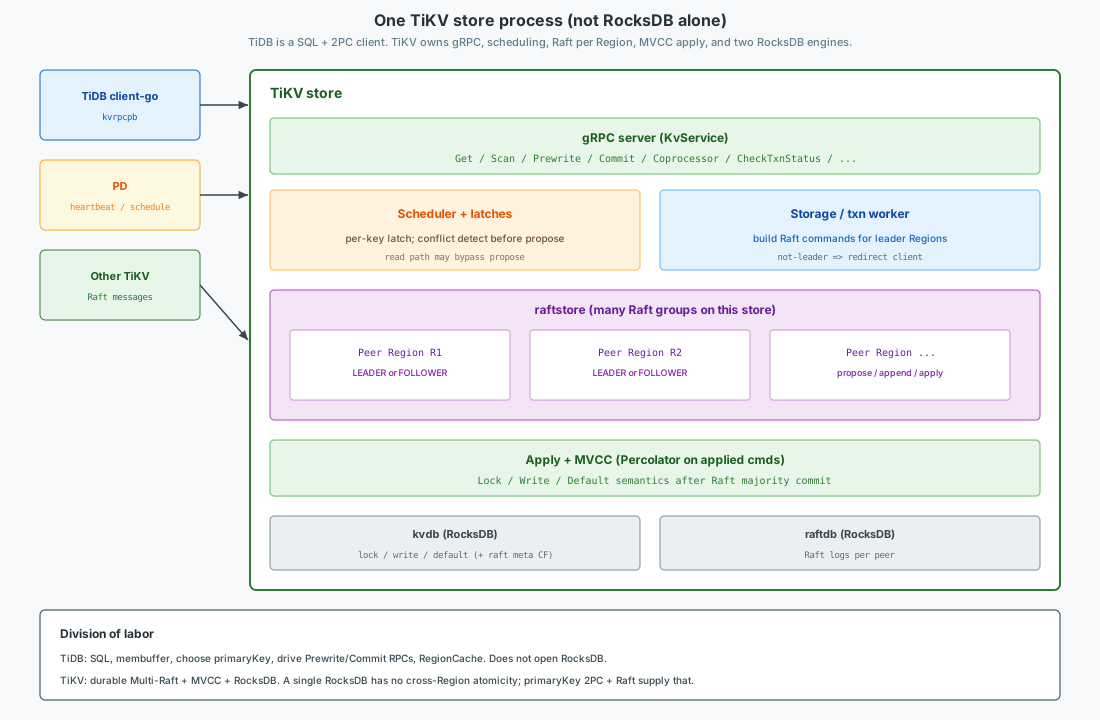
Top → bottom inside one store:
- gRPC — Get, Prewrite, Commit, Coprocessor, …
- Scheduler / latches — per-key conflict control before propose
- raftstore — FSM per peer; Multi-Raft on this machine
- Apply — committed entries → MVCC mutations
- kvdb + raftdb — two RocksDB instances
| Engine | Holds |
|---|---|
| raftdb | Raft HardState and Raft log per peer (consensus machinery) |
| kvdb | User MVCC (lock, write, default CFs) after apply |
Client KV RPCs target the Region leader. Followers receive Raft messages from other TiKV stores. PD heartbeats carry store/Region meta; they do not carry row values.
Process structure
TiKV is one OS process. Its in-memory layout is a composition of structs: ownership (struct fields) plus shared handles (Arc / Clone engine wrappers).
- TikvServer — process root: wires gRPC, engines, PD client, and the Multi-Raft system.
- Server (gRPC) — accepts client KV RPCs (Get, Prewrite, Commit, Coprocessor, …) and peer Raft messages from other TiKV stores.
- Storage / TxnScheduler — turns an RPC into transactional work: latches for key conflicts, prepare read or write batch, then hand off to the engine.
- RaftKv — Storage’s engine facade: writes go to
RaftRouteras proposals; local reads can use the kv engine / snapshot path. - Engines — shared disk handles:
kv(user MVCC) andraft(HardState + Raft log). - StoreMeta — in-memory Region map and key-range index for this store (which
region_idowns which keys). - MultiRaftServer / RaftBatchSystem — runs peer and apply pollers; owns the routers that deliver messages to FSMs.
- RaftRouter —
region_id→ mailbox of a PeerFsm; entry point for propose and Raftstep. - PeerFsm / Peer — one local replica of one Region: proposals, lease, and the Raft group.
- RawNode — raft-rs facade (
raft: Raftis the consensus state machine); opaqueEntry.datauntil apply. - PeerStorage — implements raft Storage: persist / load HardState and log entries via
Engines.raft. - ApplyFsm / ApplyDelegate — same
region_id; applies committed entries intoEngines.kv(MVCC Puts/Deletes).
@startuml

struct TikvServer {
  core : TikvServerCore
  router : RaftRouter
  system : Option~RaftBatchSystem~
  engines : Option~TikvEngines~
  servers : Option~Servers~
  pd_client : Arc~PdClient~
  concurrency_manager : ConcurrencyManager
}

struct Servers {
  server : Server
  raft_server : MultiRaftServer
  lock_mgr : LockManager
  importer : Arc~SstImporter~
}

struct TikvEngines {
  engines : Engines
  store_meta : Arc~Mutex~StoreMeta~~
  engine : RaftKv
}

struct Engines {
  kv : KvEngine
  raft : RaftEngine
}

struct StoreMeta {
  store_id : Option~u64~
  region_ranges : BTreeMap~end_key, region_id~
  regions : HashMap~region_id, Region~
  readers : HashMap~region_id, ReadDelegate~
}

struct Storage {
  engine : RaftKv
  sched : TxnScheduler
  read_pool : ReadPoolHandle
  concurrency_manager : ConcurrencyManager
}

struct RaftKv {
  router : RaftRouter
  engine : KvEngine
}

struct MultiRaftServer {
  store : metapb.Store
  system : RaftBatchSystem
  pd_client : Arc~PdClient~
}

struct RaftBatchSystem {
  system : BatchSystem~PeerFsm, StoreFsm~
  router : RaftRouter
  apply_router : ApplyRouter
  apply_system : ApplyBatchSystem
}

struct RaftRouter {
  normals : DashMap~region_id, Mailbox~PeerFsm~~
  control_box : Mailbox~StoreFsm~
}

struct PeerFsm {
  peer : Peer
  receiver : Receiver~PeerMsg~
  mailbox : Option~BasicMailbox~
  has_ready : bool
}

struct Peer {
  region_id : u64
  peer : metapb.Peer
  raft_group : RawNode~PeerStorage~
  proposals : ProposalQueue
  leader_lease : Lease
}

struct RawNode {
  raft : Raft
  storage : PeerStorage
}

struct PeerStorage {
  engines : Engines
  region : Region
  peer_id : u64
  entry_storage : EntryStorage
}

struct ApplyBatchSystem {
  normals : DashMap~region_id, Mailbox~ApplyFsm~~
}

struct ApplyFsm {
  delegate : ApplyDelegate
  receiver : Receiver~Msg~
}

struct ApplyDelegate {
  region : Region
  peer : metapb.Peer
  term : u64
  apply_state : RaftApplyState
}

TikvServer *-- Servers
TikvServer *-- TikvEngines
TikvServer o-- RaftRouter : clone handle
TikvServer o-- RaftBatchSystem : moved into MultiRaftServer

Servers *-- MultiRaftServer
Servers o-- "Server (gRPC)"

TikvEngines *-- Engines
TikvEngines *-- RaftKv
TikvEngines o-- StoreMeta : Arc

MultiRaftServer *-- RaftBatchSystem
RaftBatchSystem *-- RaftRouter
RaftBatchSystem *-- ApplyBatchSystem

Storage *-- RaftKv
RaftKv o-- RaftRouter
RaftKv o-- Engines : kv handle

RaftRouter "1" o-- "N" PeerFsm : region_id mailbox
ApplyBatchSystem "1" o-- "N" ApplyFsm : region_id mailbox

PeerFsm *-- Peer
Peer *-- RawNode : raft_group
RawNode *-- PeerStorage
PeerStorage o-- Engines : shared

ApplyFsm *-- ApplyDelegate

PeerFsm .. ApplyFsm : same region_id

@enduml
How an RPC enters. Client (TiDB) opens gRPC to this store’s Server. The handler builds a Storage command (e.g. Prewrite or Get). TxnScheduler runs it under latches. The command uses RaftKv, which already knows the target region_id from the request context (filled earlier by Region cache / PD locate on the client).
How a write becomes durable. On the Region leader, RaftKv asks RaftRouter to deliver a RaftCmdRequest to that Region’s Peer. After propose, the path is the Ready loop—not an immediate kvdb write:
- Propose — the Peer serializes the command into opaque bytes and calls
RawNode::propose, which appends a log Entry in memory insideRaft/RaftLog. - Ready (local persist) —
has_ready()yields a Ready: new log entries (and often HardState) must be written to raftdb first. - Replicate — the same Ready carries outbound
MsgAppendmessages; the leader sends them to followers. Each followersteps, persists its own raftdb copy, and acks. - Commit — when a majority has that entry durable, raft-rs advances
committed; the next Ready exposes it incommitted_entries. - Apply — the Peer hands those entries to ApplyFsm, which decodes
Entry.dataand writes MVCC into kvdb. - RPC success — only after apply does the client write RPC return. Followers apply the same committed entries on their ApplyFsm; they never accept the client write (
NotLeader).
gRPC write (Prewrite / Commit / …)
  → Storage / TxnScheduler (latch, build Modify batch)
  → RaftKv → RaftRouter → PeerFsm / Peer
  → RawNode.propose          (in-memory Entry)
  → Ready: persist entries → raftdb
  → Ready: send MsgAppend → followers (they persist + ack)
  → majority → committed_entries
  → ApplyFsm → kvdb MVCC
  → RPC response
How a query (read) works. Point Gets and snapshot reads still enter via gRPC → Storage. If the peer is leader and the lease is valid, RaftKv / local reader can serve from a snapshot of kvdb without proposing a new log entry (stale or follower reads use other rules: read index or replica read). Coprocessor scans are leader-side reads over the same MVCC. Reads do not change raftdb; they observe state already applied to kvdb.
gRPC read (Get / Coprocessor / …)
  → Storage (snapshot / read pool)
  → RaftKv / local reader → kvdb (MVCC)
  → RPC response
How Raft between stores works. Another TiKV’s Raft messages (vote, append, heartbeat) hit gRPC as Raft traffic, not as KV commands. The store routes them by region_id into the matching PeerFsm, which calls RawNode::step. Ready then updates raftdb and may send more messages or hand committed entries to ApplyFsm—the same Ready/apply machinery as a local propose, without going through Storage.
peer Raft RPC (MsgAppend / MsgRequestVote / …)
  → RaftRouter → PeerFsm
  → RawNode.step → Ready → raftdb / outbound Messages
  → committed entries → ApplyFsm → kvdb
Many Region peers share one Engines pair; each peer has its own RawNode and apply delegate. Peer Raft (tick / step / Ready / role) is §3; client writes (propose → log → engines, then MVCC / 2PC) are §4.
2. Multi-Raft
TiKV runs many Raft groups, not one: PD splits the keyspace into Regions; each Region is one Raft group (default three peers on three stores). A TiKV store hosts many peers—one local replica for each Region PD placed on that machine. The same store can be leader for some Regions and follower for others; leadership is per Region.
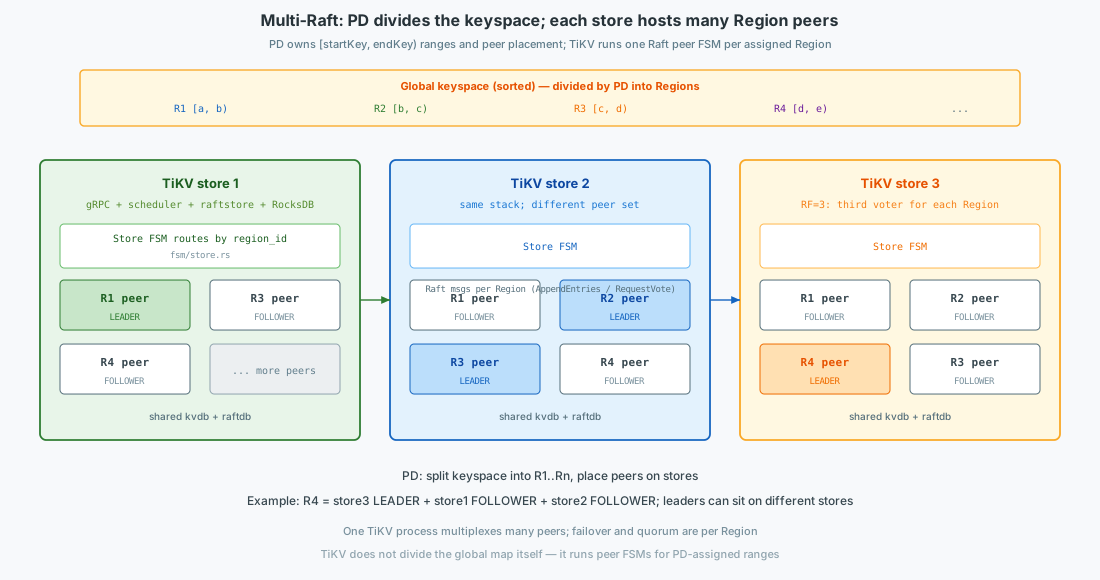
Peers share one process (TikvServer: gRPC, MultiRaftServer, Engines) so TiKV need not open a RocksDB per Region. Consensus stays independent: R1’s election and log progress do not block R2. RaftRouter routes work by region_id to each PeerFsm. Clients send KV RPCs only to that Region’s leader.
3. Peer Raft protocol
Each Region Peer owns one raft-rs RawNode—the consensus engine for that key range on this store. The protocol is one loop with three kinds of drive:
A timer tick fires on a fixed interval. Each tick advances Raft’s logical clock. On a Follower or Candidate, enough ticks without hearing the leader start an election (MsgHup); on a Leader, ticks send heartbeats (MsgBeat) so followers keep resetting their election timers. That tick → maybe Ready → idle path repeats for the life of the peer.
Raft RPCs between stores are request/response on the same machine: inbound Messages (MsgAppend, MsgRequestVote, MsgHeartbeat, and their responses) are stepped into RawNode; outbound replies and fan-out sit in msgs until Ready sends them. A follower that accepts an Append persists and answers MsgAppendResponse; a candidate that gathers vote responses may win; a leader that sees AppendResponses may advance committed. Client writes use the same Ready path; how propose grows the log and what apply means for MVCC / 2PC is §4.
State transfer (role transfer) is SoftState StateRole on that same loop—Follower, PreCandidate / Candidate, Leader—the Raft state machine, not a separate controller. Election timeout and majority votes move Follower → Candidate → Leader; a higher-term message or failed quorum check moves Leader (or Candidate) back to Follower. After any input, TiKV drains Ready: persist HardState and log entries to raftdb, send Messages, and hand committed entries to ApplyFsm for kvdb.
3.1 Peer and RawNode
RawNode.raft: the consensus engine. RawNode is a thin facade around raft: Raft. Raft holds peer id, term / vote, StateRole, timers, outbound msgs, follower progress, and RaftLog (committed index + PeerStorage). tick / step mostly forward into that field (propose on the write path is §4); RawNode then diffs SoftState / HardState to emit a Ready for the store.
@startuml


struct PeerFsm {
  peer : Peer
  has_ready : bool
}

struct Peer {
  region_id : u64
  raft_group : RawNode
  proposals : ProposalQueue
}

struct RawNode {
  raft : Raft
  prev_ss : SoftState
  prev_hs : HardState
  --
  has_ready() : bool
  ready() : Ready
}

struct Raft {
  id : u64
  term : u64
  vote : u64
  state : StateRole
  msgs : Message list
  raft_log : RaftLog
}

struct SoftState {
  leader_id : u64
  raft_state : StateRole
}

struct HardState {
  term : u64
  vote : u64
  commit : u64
}

struct RaftLog {
  store : PeerStorage
  unstable : Unstable
  committed : u64
  applied : u64
}

struct Unstable {
  entries : Entry list
  offset : u64
  snapshot : Snapshot optional
}

struct PeerStorage {
  engines : Engines
  region : Region
}

struct Ready {
  number : u64
  ss : SoftState optional
  hs : HardState optional
  entries : Entry list
  messages : Message list
  committed_entries : Entry list
  must_sync : bool
}

struct ApplyFsm {
  delegate : ApplyDelegate
}

PeerFsm *-- Peer
Peer *-- RawNode : raft_group
RawNode *-- Raft
RawNode o-- SoftState : prev_ss
RawNode o-- HardState : prev_hs
RawNode .. Ready : ready()
PeerFsm .. RawNode : has_ready flag then has_ready()
Raft *-- RaftLog
RaftLog *-- Unstable : unstable
RaftLog o-- PeerStorage : store
PeerStorage o-- Engines : raft + kv
Peer .. ApplyFsm : Msg::Apply same region_id
Ready o-- SoftState : ss
Ready o-- HardState : hs
Ready .. Unstable : Ready.entries from unstable
Ready .. PeerStorage : persist hs + entries
Ready .. ApplyFsm : committed_entries

@enduml
PeerFsm.has_ready is TiKV’s poll batching flag (set after tick / step, and after propose on the write path). RawNode::has_ready() is raft-rs’s real check against prev_ss / prev_hs, unstable, and msgs; ready() then materializes the Ready value the store must persist and send. Ready drain is below (§3.2.3); client propose that fills the log is §4.
3.2 Raft cycles and role transfer
Peer Raft is the repeated cycle (tick / step → Ready) plus role transfer on SoftState StateRole (Follower ⇄ Candidate ⇄ Leader). Inputs drive both: a cycle may send votes or heartbeats without changing role, or it may call become_* / hup / poll and transfer role; afterward the same Ready drain runs. Client log appends (propose) use that same Ready path and are §4.
Everything that moves consensus state enters RawNode through tick or step (tick synthesizes local messages). TiKV’s Peer poller invokes them; afterward Ready—persist, send, apply, advance—then idle until the next input.
| Call | Who invokes it (TiKV) | Role |
|---|---|---|
tick | Peer base-tick (on_raft_base_tick → raft_group.tick) | Advance the logical clock: election timeout or leader heartbeat |
step | Peer Raft RPC (Peer::step) and local msgs from tick | Apply one Message; update term, role, log, outbound msgs |
One cycle on the store side (same drain after any dirtying input):
@startuml
hide empty description

state "Idle\n(no pending Ready)" as Idle
state "Input\ntick / step" as In
state "Raft updated\n(role, term, log, msgs)" as Upd
state "has_ready?" as HR <<choice>>
state "Take Ready" as Take
state "Persist\nHardState + entries\n→ raftdb" as Pers
state "Send messages\n(votes, Append, …)" as Send
state "Schedule apply\ncommitted_entries\n→ ApplyFsm → kvdb" as App
state "advance / light apply" as Adv

[*] --> Idle
Idle --> In : Peer poller / RPC
In --> Upd : Raft::tick or Raft::step
Upd --> HR
HR --> Idle : false
HR --> Take : true
Take --> Pers
Take --> Send
Take --> App
Pers --> Adv
Send --> Adv
App --> Adv
Adv --> Idle : ready handled;\nprev_ss / prev_hs updated

note right of Take
  Ready may carry:
  ss SoftState (role change)
  hs HardState (term/vote/commit)
  entries, messages,
  committed_entries
end note
@enduml
  tick / step
           │
           ▼
    Raft in-memory update
    (term, log, msgs; maybe StateRole)
           │
           ▼ has_ready()
    Ready { ss?, hs?, entries?, messages?, committed_entries? }
           │
     ┌─────┼─────┐
     ▼     ▼     ▼
  raftdb  send  ApplyFsm → kvdb
     └─────┴─────┘
           ▼
      advance → Idle  (next cycle)
Each cycle is input → maybe Ready drain. Role transfers happen inside some cycles. Growing the log with client bytes is propose on a Leader (§4).
tick  → (MsgHup | MsgBeat) → Raft::step → maybe Ready (votes / heartbeats)
step  → Message from peer  → Raft::step → maybe Ready (log / HardState / msgs)
         └──────── both share the Ready → raftdb / apply path
3.2.1 tick — timers
tick advances Raft’s logical clock by one unit. The library does not read wall time; TiKV’s peer base-tick must call RawNode::tick on a fixed interval. What a tick does depends on StateRole: as Follower, PreCandidate, or Candidate, successive ticks accumulate election_elapsed until the randomized election timeout fires, at which point the peer injects a local MsgHup and campaigns; as Leader, ticks accumulate heartbeat_elapsed (and optionally run a quorum check) and inject MsgBeat so followers keep resetting their election timers. A tick therefore either starts or sustains leadership—it never itself appends client log entries.
Implementation. RawNode::tick forwards to Raft::tick, which branches on role:
// RawNode
pub fn tick(&mut self) -> bool {
    self.raft.tick()
}

// Raft
pub fn tick(&mut self) -> bool {
    match self.state {
        StateRole::Follower | StateRole::PreCandidate | StateRole::Candidate => {
            self.tick_election()
        }
        StateRole::Leader => self.tick_heartbeat(),
    }
}
// Follower / Candidate: election timeout → campaign
pub fn tick_election(&mut self) -> bool {
    self.election_elapsed += 1;
    if !self.pass_election_timeout() || !self.promotable {
        return false;
    }
    self.election_elapsed = 0;
    let m = new_message(INVALID_ID, MessageType::MsgHup, Some(self.id));
    let _ = self.step(m);   // becomes Candidate, sends MsgRequestVote
    true
}

// Leader: heartbeat timeout → bcast heartbeat
fn tick_heartbeat(&mut self) -> bool {
    self.heartbeat_elapsed += 1;
    // …
    if self.heartbeat_elapsed >= self.heartbeat_timeout {
        self.heartbeat_elapsed = 0;
        let m = new_message(INVALID_ID, MessageType::MsgBeat, Some(self.id));
        let _ = self.step(m);   // step_leader → bcast_heartbeat
    }
    // …
}
TiKV schedules a per-peer Raft tick; when it fires, has_ready may become true so heartbeats or vote messages leave via Ready.
3.2.2 step — network (and local) messages
step is the single transition function of the consensus state machine: it consumes one Message and may update term, vote, StateRole, the Raft log, follower progress, and the outbound msgs queue. Network RPCs from other peers (MsgAppend, MsgAppendResponse, MsgHeartbeat, MsgRequestVote, …) enter through RawNode::step → Raft::step. Local control messages synthesized by tick (MsgHup, MsgBeat; MsgPropose in §4) call Raft::step directly. Every meaningful role change and almost every log mutation is the result of some step; Ready only reports what step (or a preceding tick that stepped) already changed.
Implementation. RawNode::step rejects unexpected local message types from the network, then calls Raft::step:
// Peer — after gRPC delivers a Raft Message for this region_id
self.raft_group.step(m)?;

// RawNode::step
pub fn step(&mut self, m: Message) -> Result<()> {
    if is_local_msg(m.get_msg_type()) {
        return Err(Error::StepLocalMsg);
    }
    // …
    self.raft.step(m)
}
Raft::step has two phases: term gate, then message / role dispatch. SoftState moves only inside become_*; Ready later surfaces ss if it differs from prev_ss. Local messages that tick injects call Raft::step directly (not RawNode::step), so MsgHup / MsgBeat are not rejected as StepLocalMsg.
1. Term gate — compare m.term to self.term before interpreting the payload:
pub fn step(&mut self, m: Message) -> Result<()> {
    if m.term == 0 {
        // local message (MsgHup / MsgBeat / MsgPropose, …)
    } else if m.term > self.term {
        // … PreVote quirks: may ignore vote while lease valid; may not bump term …
        if m.get_msg_type() == MessageType::MsgAppend
            || m.get_msg_type() == MessageType::MsgHeartbeat
            || m.get_msg_type() == MessageType::MsgSnapshot
        {
            self.become_follower(m.term, m.from);
        } else if /* not a PreVote special case */ {
            self.become_follower(m.term, INVALID_ID);
        }
    } else if m.term < self.term {
        // stale leader/candidate: often reply MsgAppendResponse so they learn
        // the newer term, then return without applying the old message
        return Ok(());
    }
    // … continue to dispatch …
2. Dispatch — MsgHup / votes are handled here; everything else goes to the role-specific stepper:
    match m.get_msg_type() {
        MessageType::MsgHup => self.hup(false),  // → campaign → PreCandidate or Candidate
        MessageType::MsgRequestVote | MessageType::MsgRequestPreVote => {
            // grant or reject; maybe set self.vote = m.from
            // (does not change StateRole by itself)
        }
        _ => match self.state {
            StateRole::PreCandidate | StateRole::Candidate => self.step_candidate(m)?,
            StateRole::Follower => self.step_follower(m)?,
            StateRole::Leader => self.step_leader(m)?,
        },
    }
    Ok(())
}
3. Role steppers and final handlers — MsgHup (from tick, or follower MsgTimeoutNow) starts a campaign; vote responses and Append/Heartbeat drive the rest:
fn hup(&mut self, transfer_leader: bool) {
    if self.state == StateRole::Leader { return; }
    // … refuse if unapplied conf changes …
    if transfer_leader {
        self.campaign(CAMPAIGN_TRANSFER);       // → Candidate, no PreVote
    } else if self.pre_vote {
        self.campaign(CAMPAIGN_PRE_ELECTION);   // → PreCandidate
    } else {
        self.campaign(CAMPAIGN_ELECTION);       // → Candidate (term++)
    }
}

pub fn campaign(&mut self, campaign_type: &'static [u8]) {
    let (vote_msg, term) = if campaign_type == CAMPAIGN_PRE_ELECTION {
        self.become_pre_candidate(); // state = PreCandidate; term unchanged
        (MessageType::MsgRequestPreVote, self.term + 1)
    } else {
        self.become_candidate();     // term++; vote = self; state = Candidate
        (MessageType::MsgRequestVote, self.term)
    };
    if VoteResult::Won == self.poll(self.id, vote_msg, true) {
        return; // single-node
    }
    // … send vote_msg to other voters …
}

pub fn become_follower(&mut self, term: u64, leader_id: u64) {
    self.reset(term);
    self.leader_id = leader_id;
    self.state = StateRole::Follower;
}

pub fn become_pre_candidate(&mut self) {
    self.state = StateRole::PreCandidate;
    self.prs.reset_votes();
    self.leader_id = INVALID_ID; // term / vote unchanged
}

pub fn become_candidate(&mut self) {
    let term = self.term + 1;
    self.reset(term);
    self.vote = self.id;
    self.state = StateRole::Candidate;
}

pub fn become_leader(&mut self) {
    let term = self.term;
    self.reset(term);
    self.leader_id = self.id;
    self.state = StateRole::Leader;
    self.append_entry(&mut [Entry::default()]); // empty noop
}

fn step_leader(&mut self, mut m: Message) -> Result<()> {
    match m.get_msg_type() {
        MessageType::MsgBeat => { self.bcast_heartbeat(); return Ok(()); }
        MessageType::MsgCheckQuorum => {
            if !self.check_quorum_active() {
                self.become_follower(self.term, INVALID_ID); // Leader → Follower
            }
            return Ok(());
        }
        MessageType::MsgPropose => {
            if !self.append_entry(m.mut_entries()) {
                return Err(Error::ProposalDropped);
            }
            self.bcast_append(); // role unchanged
            return Ok(());
        }
        MessageType::MsgAppendResponse => self.handle_append_response(&m),
        // MsgHeartbeatResponse / MsgTransferLeader / … → handle_*
        _ => {}
    }
    Ok(())
}

pub fn append_entry(&mut self, es: &mut [Entry]) -> bool {
    if !self.maybe_increase_uncommitted_size(es) {
        return false;
    }
    let li = self.raft_log.last_index();
    for (i, e) in es.iter_mut().enumerate() {
        e.term = self.term;
        e.index = li + 1 + i as u64;
    }
    self.raft_log.append(es); // → RaftLog.unstable
    true
}

pub fn bcast_append(&mut self) {
    let self_id = self.id;
    let core = &mut self.r;
    let msgs = &mut self.msgs;
    self.prs.iter_mut()
        .filter(|&(id, _)| *id != self_id)
        .for_each(|(id, pr)| core.send_append(*id, pr, msgs));
}

fn handle_append_response(&mut self, m: &Message) {
    // … reject → maybe_decr_to + send_append; accept → maybe_update …
    if self.maybe_commit() && self.should_bcast_commit() {
        self.bcast_append();
    }
    self.send_append_aggressively(m.from);
}

fn step_candidate(&mut self, m: Message) -> Result<()> {
    match m.get_msg_type() {
        MessageType::MsgAppend => {
            self.become_follower(m.term, m.from);
            self.handle_append_entries(&m);
        }
        MessageType::MsgHeartbeat => {
            self.become_follower(m.term, m.from);
            self.handle_heartbeat(m);
        }
        MessageType::MsgSnapshot => {
            self.become_follower(m.term, m.from);
            self.handle_snapshot(m);
        }
        MessageType::MsgRequestPreVoteResponse | MessageType::MsgRequestVoteResponse => {
            self.poll(m.from, m.get_msg_type(), !m.reject);
            // Won → campaign again or become_leader; Lost → become_follower
        }
        MessageType::MsgPropose => return Err(Error::ProposalDropped),
        _ => {}
    }
    Ok(())
}

fn poll(&mut self, from: u64, t: MessageType, vote: bool) -> VoteResult {
    self.prs.record_vote(from, vote);
    match self.prs.tally_votes().2 {
        VoteResult::Won if self.state == StateRole::PreCandidate => {
            self.campaign(CAMPAIGN_ELECTION);   // → Candidate
        }
        VoteResult::Won => {
            self.become_leader();                 // → Leader
            self.bcast_append();
        }
        VoteResult::Lost => self.become_follower(self.term, INVALID_ID),
        VoteResult::Pending => {}
    }
    // …
}

fn step_follower(&mut self, mut m: Message) -> Result<()> {
    match m.get_msg_type() {
        MessageType::MsgPropose => {
            m.to = self.leader_id;
            self.r.send(m, &mut self.msgs);  // forward; role unchanged
        }
        MessageType::MsgAppend => {
            self.election_elapsed = 0;
            self.leader_id = m.from;
            self.handle_append_entries(&m);
        }
        MessageType::MsgHeartbeat => {
            self.election_elapsed = 0;
            self.leader_id = m.from;
            self.handle_heartbeat(m);
        }
        MessageType::MsgSnapshot => {
            self.election_elapsed = 0;
            self.leader_id = m.from;
            self.handle_snapshot(m);
        }
        MessageType::MsgTimeoutNow => {
            self.hup(true);  // transfer: → Candidate (skip PreVote)
        }
        // …
        _ => {}
    }
    Ok(())
}

pub fn handle_append_entries(&mut self, m: &Message) {
    // … reject if m.index < committed; else maybe_append …
    let mut to_send = Message::default();
    to_send.set_msg_type(MessageType::MsgAppendResponse);
    to_send.to = m.from;
    if let Some((_, last_idx)) =
        self.raft_log.maybe_append(m.index, m.log_term, m.commit, &m.entries)
    {
        to_send.set_index(last_idx);
    } else {
        to_send.reject = true;
        // … reject_hint / log_term from find_conflict_by_term …
    }
    to_send.set_commit(self.raft_log.committed);
    self.r.send(to_send, &mut self.msgs);
}

pub fn handle_heartbeat(&mut self, mut m: Message) {
    self.raft_log.commit_to(m.commit);
    let mut to_send = Message::default();
    to_send.set_msg_type(MessageType::MsgHeartbeatResponse);
    to_send.to = m.from;
    to_send.context = m.take_context();
    to_send.commit = self.raft_log.committed;
    self.r.send(to_send, &mut self.msgs);
}

fn handle_snapshot(&mut self, mut m: Message) {
    let mut to_send = Message::default();
    to_send.set_msg_type(MessageType::MsgAppendResponse);
    to_send.to = m.from;
    if self.restore(m.take_snapshot()) {
        to_send.index = self.raft_log.last_index();
    } else {
        to_send.index = self.raft_log.committed;
    }
    self.r.send(to_send, &mut self.msgs);
}
3.2.3 Ready: when it fires, and how unstable becomes durable
In-memory deltas are not durable. After tick / step / propose, new log entries may sit only in RaftLog.unstable, outbound RPCs in Raft.msgs, and SoftState / HardState may differ from RawNode’s prev_ss / prev_hs. Nothing is durable until the Peer drains a Ready.
When Ready is triggered. TiKV does not call RawNode::has_ready on every message inline. The peer FSM sets a local flag after inputs that may dirty Raft; at the end of the poll, it drains Ready if that flag is set.
After tick / step / propose, mark the peer dirty:
// tick (on_raft_base_tick)
if self.fsm.peer.raft_group.tick() {
    self.fsm.has_ready = true;
}

// step (inbound Raft Message for this region)
self.fsm.peer.step(self.ctx, msg.take_message())?;
// …
self.fsm.has_ready = true;

// propose (RaftCmdRequest on the leader)
if self.fsm.peer.propose(self.ctx, cb, msg, resp, diskfullopt) {
    self.fsm.has_ready = true;
}
End of the peer poll cycle — only then call into raft-rs:
// PeerFsmDelegate::collect_ready — after handle_msgs in this poll
pub fn collect_ready(&mut self) -> bool {
    let has_ready = self.fsm.has_ready;
    self.fsm.has_ready = false;
    if !has_ready || self.fsm.stopped {
        return false;
    }
    let res = self.fsm.peer.handle_raft_ready_append(self.ctx);
    // …
}

// Peer::handle_raft_ready_append
if !self.raft_group.has_ready() {
    return None;  // flag was optimistic; nothing to drain
}
let mut ready = self.raft_group.ready();
RawNode::has_ready() is the precise check: true when any in-memory delta exists:
pub fn has_ready(&self) -> bool {
    let raft = &self.raft;
    if !raft.msgs.is_empty() { return true; }                    // outbound Messages
    if raft.soft_state() != self.prev_ss { return true; }        // role / leader_id
    if raft.hard_state() != self.prev_hs { return true; }        // term / vote / commit
    if !raft.raft_log.unstable_entries().is_empty() { return true; } // unstable log
    // … snapshot or newly commit-able entries since commit_since_index …
    false
}
tick / step / propose
  → PeerFsm.has_ready = true          (batching flag)
  → (more msgs in same poll…)
  → collect_ready()
       → handle_raft_ready_append()
            → RawNode::has_ready()?   (real check)
            → RawNode::ready()
A successful propose (§4) sets the FSM flag because unstable is non-empty and msgs holds MsgAppend; elections and Append paths set it for the same reason when msgs / HardState / SoftState change. has_ready() confirms before ready() is taken.
What ready() packages. RawNode::ready() snapshots those deltas into a Ready the store must handle before further step / propose:
pub fn ready(&mut self) -> Ready {
    // …
    if ss != self.prev_ss { rd.ss = Some(ss); }
    if hs != self.prev_hs { rd.hs = Some(hs); }
    rd.entries = raft.raft_log.unstable_entries().to_vec(); // copy from Unstable
    // Leader: messages may be sent before/while persisting (concurrent replication)
    // Follower: messages that must wait for persist go on the persisted path
    rd.light = self.gen_light_ready(); // messages + committed_entries
    rd
}
| Ready field | Comes from (in memory) | Peer must |
|---|---|---|
entries | RaftLog.unstable.entries | Persist to raftdb (PeerStorage / write worker) |
hs | HardState delta vs prev_hs | Persist to raftdb |
ss | SoftState delta vs prev_ss | Update lease / role bookkeeping (not raftdb log) |
messages | Raft.msgs (e.g. MsgAppend) | Send to other TiKV peers |
committed_entries | committed but not yet applied slice | Schedule ApplyFsm → kvdb |
propose / step / tick
  → only memory: Unstable + msgs (+ maybe term/role)
  → has_ready() == true
  → ready()
       Ready.entries  ← unstable_entries()
       Ready.messages ← raft.msgs
       Ready.hs / ss  ← HardState / SoftState deltas
  → Peer:
       persist entries + hs → raftdb
       send messages → network
       committed_entries → ApplyFsm
  → advance / on_persist_*  (stable unstable; update prev_ss / prev_hs)
if !self.raft_group.has_ready() { return None; }
let mut ready = self.raft_group.ready();

if !ready.messages().is_empty() {
    let raft_msgs = self.build_raft_messages(ctx, ready.take_messages());
    self.send_raft_messages(ctx, raft_msgs);   // MsgAppend, votes, …
}
if !ready.committed_entries().is_empty() {
    self.handle_raft_committed_entries(ctx, ready.take_committed_entries());
}
// PeerStorage::handle_raft_ready → WriteTask → raftdb
self.mut_store().handle_raft_ready(&mut ready, destroy_regions)?;
3.2.4 Persist: unstable entries and HardState → raftdb
PeerStorage folds Ready’s entries (the unstable snapshot) and optional HardState into a write task; the async write worker appends to the shared raft engine:
// PeerStorage::handle_raft_ready
if !ready.entries().is_empty() {
    self.append(ready.take_entries(), &mut write_task);  // EntryStorage cache + task
}
if let Some(hs) = ready.hs() {
    self.raft_state_mut().set_hard_state(hs.clone());
}
if prev_raft_state != *self.raft_state() || !ready.snapshot().is_empty() {
    write_task.raft_state = Some(self.raft_state().clone());
}
After the write succeeds, TiKV notifies raft-rs (on_persist_entries / advance) so unstable can drop the persisted prefix and persisted / match indexes advance. Until that persist (and follower majority acks) completes, the entry is not committed. User kvdb is still unchanged.
3.2.5 Replicate then commit
Ready messages are the network side of the cycle: typically MsgAppend carrying new entries (from propose or follower catch-up), plus heartbeats / votes from other paths. Followers step those messages, append into their unstable, run the same Ready persist path on their raftdb, and respond. When a majority has the entry durable, RaftLog.committed advances; a later Ready exposes it in committed_entries for apply (§4.1.6).
3.2.6 Role transfer (state machine)
SoftState StateRole (Follower / PreCandidate / Candidate / Leader) is the peer’s leadership state machine. Role transfer is moving along that machine when a cycle calls become_* / hup / poll. After an input, SoftState / HardState / log / msgs deltas still surface as Ready on the same drain path. Appending client entries (propose) does not transfer role (§4).
Transitions (Raft.state / SoftState raft_state):
@startuml
hide empty description
skinparam state {
  BackgroundColor<<leader>> #E8F5E9
  BackgroundColor<<cand>> #FFF8E1
  BackgroundColor<<fol>> #E3F2FD
}

state "Follower" as F <<fol>>
state "PreCandidate\n(pre-vote on)" as P <<cand>>
state "Candidate" as C <<cand>>
state "Leader" as L <<leader>>

[*] --> F : bootstrap / restart\n(load HardState)

F --> P : tick election timeout\n(pre_vote) / MsgHup dry-run
F --> C : tick election timeout\n(no pre_vote) / MsgHup\n(term++)
P --> C : pre-vote majority\nthen real campaign (term++)
P --> F : pre-vote rejected /\nhear valid leader (higher or current term)

C --> L : majority MsgRequestVoteResponse\n(granted) → become_leader
C --> C : election timeout again\n(term++; new MsgRequestVote)
C --> F : step: higher Message.term /\nAppend or Heartbeat from leader /\nlose vote

L --> F : step: Message.term > currentTerm\n(become_follower) /\ntick: MsgCheckQuorum fails

F --> F : step MsgAppend / MsgHeartbeat\n(same or lower ok path;\nreset election_elapsed)
L --> L : tick MsgBeat (heartbeat) /\nstep MsgAppendResponse\n(role unchanged; propose in §4)

@enduml
Those transitions are the become_* / hup / poll / step_* paths under step; the diagram is the SoftState view of the same calls.
3.3 Example: Follower → Leader (steps, Ready, Raft log)
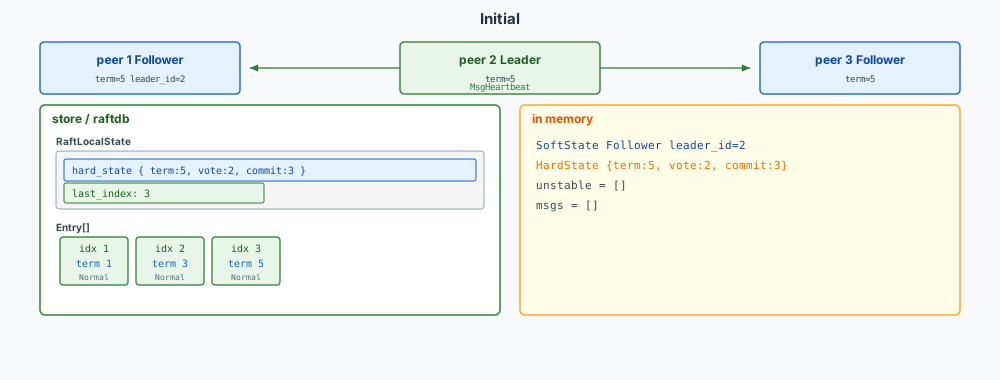
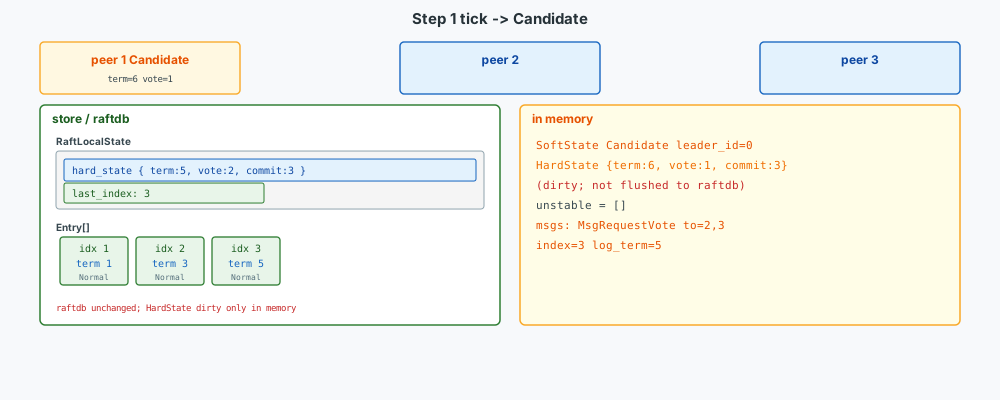
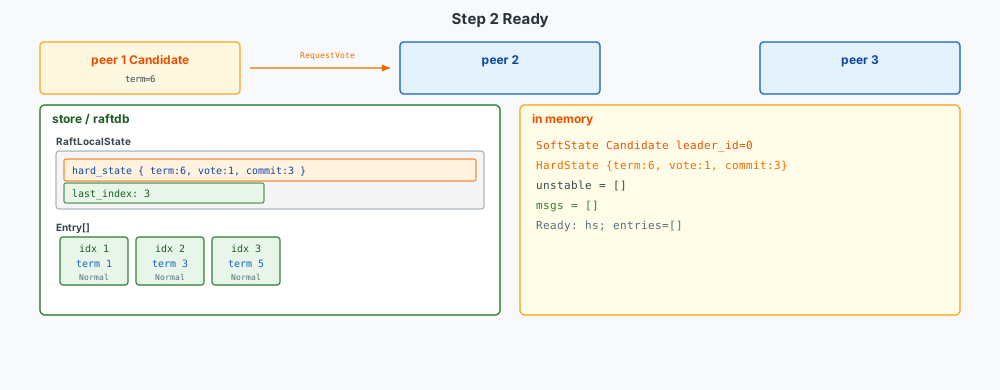
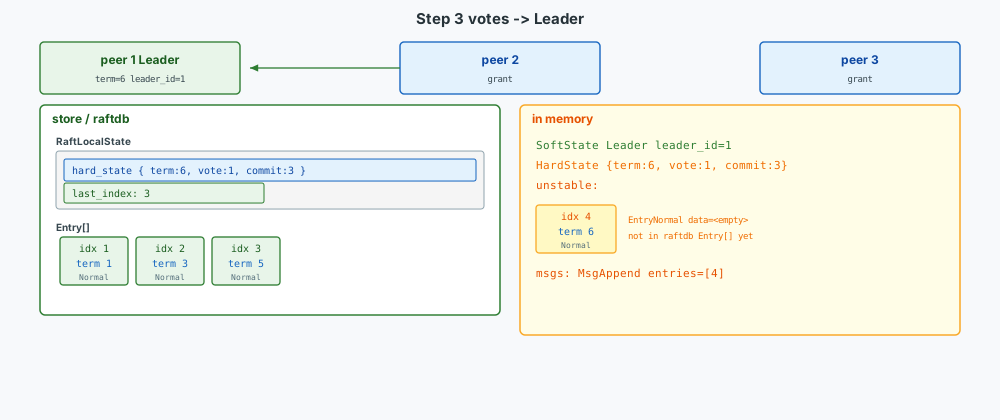
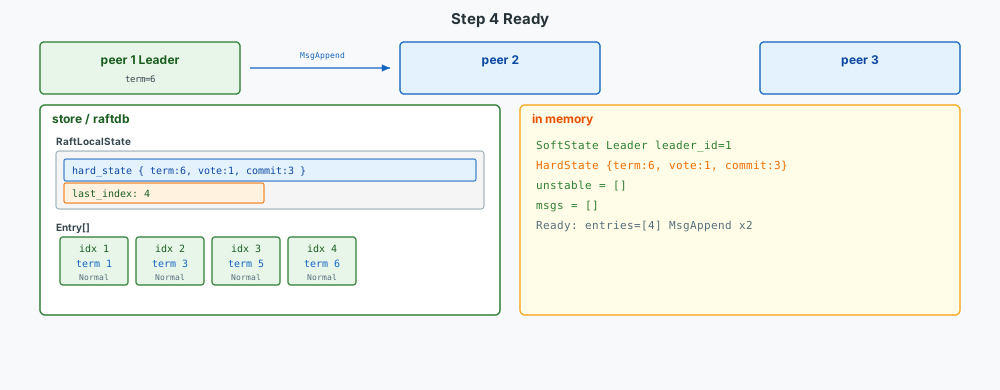
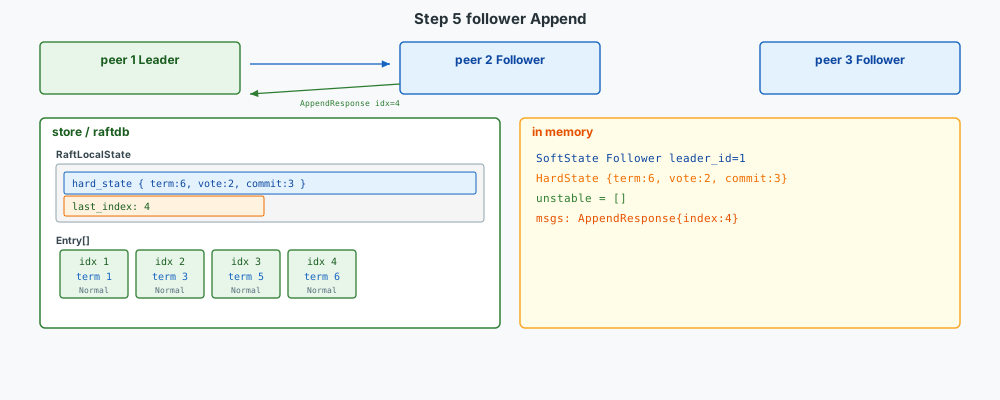
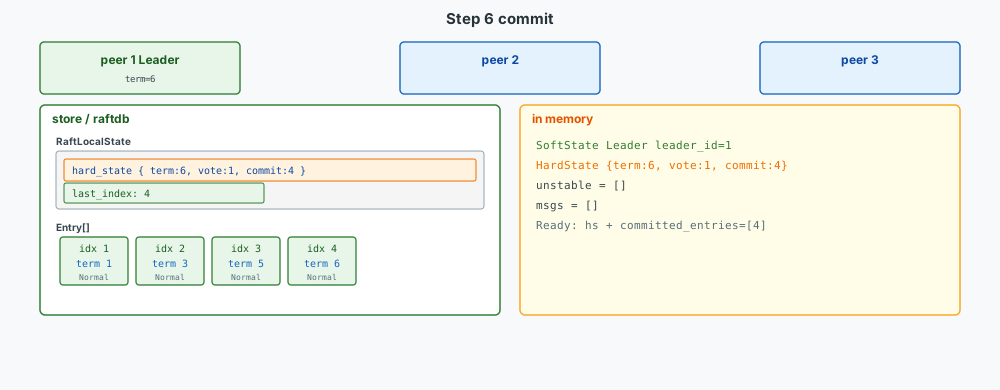
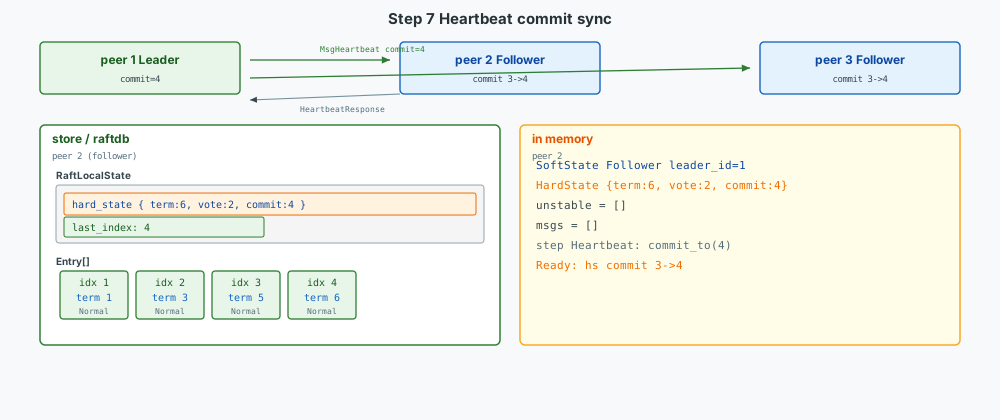
Three peers (1, 2, 3; majority = 2). Track peer 1. PreVote off. Peer Raft only (empty leader noops). Figures split store / raftdb (RaftLocalState + Entry[]) vs in memory (SoftState, HardState, unstable, msgs).
Initial — peer 1 Follower, peer 2 Leader.
Step 1 — tick election timeout → Candidate; votes queued in msgs.
Step 2 — Ready — persist HardState; send MsgRequestVote.
Step 3 — step vote grants → Leader; noop in unstable.
Step 4 — Ready — persist Entry 4; send MsgAppend.
Step 5 — followers step Append — persist; MsgAppendResponse.
Step 6 — step AppendResponse — peer 1 hard_state.commit = 4 (followers still 3).
Step 7 — Heartbeat — peer 1 sends MsgHeartbeat with commit=4; peers 2 / 3 commit_to(4) and persist hard_state.commit.
4. Client writes (Raft path)
A client write first changes the Raft log on the Region leader (propose → Entry in unstable). Ready (§3) persists and replicates that log to raftdb; apply (§4.1.6) turns committed Entry.data into kvdb. Applied bytes are MVCC CF mutations; multi-key transactions use Percolator 2PC over that path.
4.1 Client write → Raft log → raftdb / kvdb
A client write on the Region leader becomes opaque bytes in a Raft Entry, then—via the Ready cycle in §3—lands in raftdb (log + HardState) and finally kvdb (MVCC Puts/Deletes). Followers never accept the client RPC (NotLeader); they still append and apply the same log.
gRPC (Prewrite / Commit / Rollback / …)
  → Storage + TxnScheduler   (latches; conflict / lock checks; build Modify batch)
  → RaftKv → RaftRouter → Peer
  → propose → RaftLog.unstable (+ MsgAppend in msgs)
  → Ready (§3.2.3): persist Entry → raftdb
  → replicate / majority → committed
  → ApplyFsm (§4.1.6): Entry.data → kvdb
  → RPC callback
| Layer | Role on the write path |
|---|---|
| TxnScheduler | Per-key latches; run Prewrite/Commit/…; produce Modifys |
| RaftKv / Peer | Serialize RaftCmdRequest, propose into the Raft log |
| Ready / PeerStorage | Persist Entry + HardState to raftdb (§3.2.3–§3.2.4) |
| ApplyDelegate | Decode committed Entry.data into CF mutations on kvdb (§4.1.6) |
// Modify::Put → one RaftCmdRequest Request (CF + key + value)
Modify::Put(cf, k, v) => {
    let mut put = PutRequest::default();
    put.set_key(k.into_encoded());
    put.set_value(v);
    if cf != CF_DEFAULT {
        put.set_cf(cf.to_string());
    }
    req.set_cmd_type(CmdType::Put);
    req.set_put(put);
}
let reqs: Vec<Request> = batch.modifies.into_iter().map(Into::into).collect();
let mut cmd = RaftCmdRequest::default();
cmd.set_header(header);       // region_id, epoch, peer, …
cmd.set_requests(reqs.into());
// → peer.propose(cmd.write_to_bytes())
4.1.1 propose — append into the Raft log
propose is how a Leader turns a client write into a Raft log entry. TiKV passes opaque bytes—typically a serialized RaftCmdRequest—plus an optional context; RawNode::propose wraps them as a local MsgPropose and Raft::steps that message. On the leader, step_leader assigns term/index, appends to RaftLog, and queues MsgAppend for followers. On a non-leader, the same MsgPropose is forwarded or dropped (NotLeader / ProposalDropped); followers never treat propose as authority to grow the log themselves. Propose does not change StateRole: it only extends the log when the peer already is Leader, then relies on the Ready drain (§3.2.3–§3.2.5) for raftdb persistence and replication, then apply (§4.1.6).
Implementation. RawNode::propose builds a local MsgPropose and steps it; there is no separate propose engine:
// Peer::propose_normal — after req.write_to_bytes()
self.raft_group.propose(ctx.to_vec(), data)?;

// RawNode::propose
pub fn propose(&mut self, context: impl Into<Bytes>, data: impl Into<Bytes>) -> Result<()> {
    let mut m = Message::default();
    m.set_msg_type(MessageType::MsgPropose);
    m.from = self.raft.id;
    let mut e = Entry::default();
    e.data = data.into();       // RaftCmdRequest bytes
    e.context = context.into();
    m.set_entries(vec![e].into());
    self.raft.step(m)           // → step_leader MsgPropose
}
On the leader, step_leader accepts MsgPropose, then append_entry → bcast_append (snippets under step above). Persistence to raftdb is not inside step: Ready (§3.2.3) later exposes RaftLog.unstable.
MsgPropose { entries: [Entry { data, context, term:0, index:0 }] }
  → append_entry: set term/index → RaftLog.unstable
  → bcast_append: msgs += MsgAppend(…)
  → Ready (§3.2.3): entries → raftdb; messages → followers; committed_entries → apply (§4.1.6)
Entry.data stays opaque inside raft-rs: no CF names, no MVCC decode.
4.1.2 Raft log shape (RaftLog, Unstable, Entry)
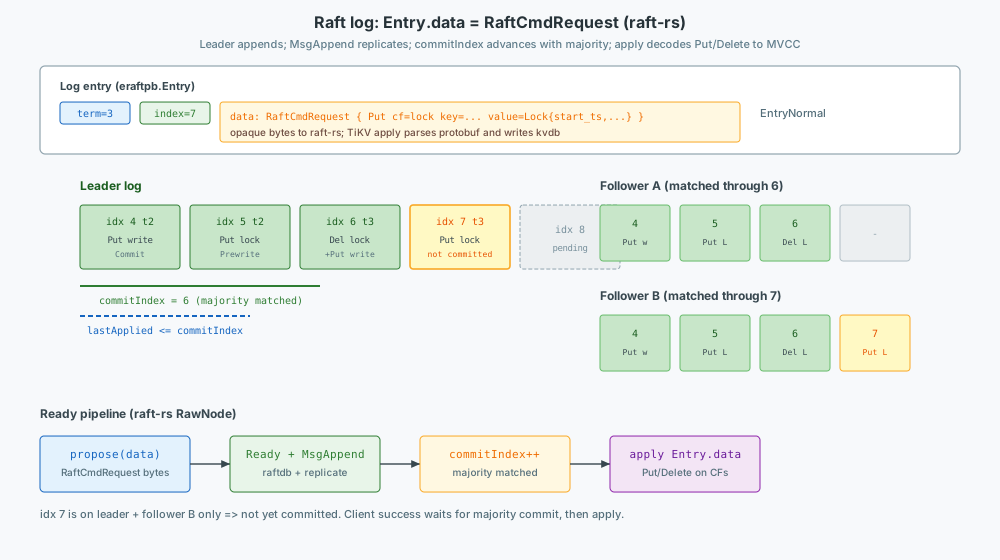
On the write path, every durable mutation is one Entry in Raft.raft_log: RaftLog. Commit advances a contiguous prefix (committed); apply consumes that prefix into the state machine (applied).
| Piece | Role |
|---|---|
store (PeerStorage) | Entries (and HardState) already written to raftdb |
unstable | Entries (and optional snapshot) not yet persisted; filled by append_entry / follower append |
committed | Highest index known majority-replicated (commitIndex) |
applied | Highest index handed to ApplyFsm (lastApplied ≤ committed) |
index:  1        2        3        4
term:   1        1        2        2
        [==== committed ====]
                 ^
            applied may lag committed until ApplyFsm catches up
4.1.3 Entry fields
enum EntryType {
  EntryNormal = 0;
  EntryConfChange = 1;
  EntryConfChangeV2 = 2;
}

message Entry {
  EntryType entry_type = 1;
  uint64 term = 2;           // leader currentTerm when created
  uint64 index = 3;          // position in the log
  bytes data = 4;            // type-dependent payload
  bytes context = 6;         // optional proposal context
}
| Field | Function |
|---|---|
index | Contiguous position; leaders assign last_index + 1 on propose |
term | Election term that created this slot; fixed for that entry |
data | Payload interpreted by entry_type (below) |
entry_type | Which of the three log kinds this slot is |
context | Opaque side channel (TiKV proposal callback id, etc.) |
4.1.4 Entry types (all kinds, with examples)
raft-rs defines exactly three EntryType values. TiKV uses all of them.
1. EntryNormal — user / admin Raft commands (or empty noop).data is usually a serialized RaftCmdRequest. Apply decodes Puts/Deletes onto MVCC CFs (§4.2). An empty EntryNormal (no data) is the leader’s first noop after become_leader, used to commit prior-term entries.
# Prewrite lock (typical TiKV write)
Entry {
  entry_type: EntryNormal,
  term:  3,
  index: 42,
  data:  RaftCmdRequest {
    header: { region_id, peer, region_epoch, … },
    requests: [
      Put { cf: "lock", key: <user key>, value: <Lock { startTS, primary, … }> }
      // optional: Put { cf: "default", … }
    ]
  }
}

# Commit (clear lock + write record)
Entry {
  entry_type: EntryNormal,
  term:  3,
  index: 43,
  data:  RaftCmdRequest {
    requests: [
      Put    { cf: "write", key: <user key>@commitTS, value: <Write { startTS, … }> },
      Delete { cf: "lock",  key: <user key> }
    ]
  }
}

# Leader noop after election (commit barrier for prior term)
Entry {
  entry_type: EntryNormal,
  term:  4,          // new leader’s term
  index: 44,
  data:  <empty>
}
2. EntryConfChange — single membership change (v1).data is a ConfChange: add / remove voter or add learner, one peer at a time. TiKV still accepts this type on apply; new proposals prefer V2.
Entry {
  entry_type: EntryConfChange,
  term:  5,
  index: 50,
  data:  ConfChange {
    change_type: AddNode,      // or RemoveNode / AddLearnerNode
    node_id: 1003,
    context: <optional app bytes>
  }
}
3. EntryConfChangeV2 — joint consensus / multi-change (v2).data is a ConfChangeV2: one or more ConfChangeSingle ops, optional transition mode. An empty ConfChangeV2 (nil data) is used to leave a joint configuration automatically when auto_leave is set.
# Add a learner and remove a voter in one joint change
Entry {
  entry_type: EntryConfChangeV2,
  term:  6,
  index: 60,
  data:  ConfChangeV2 {
    transition: Auto,          // or Implicit / Explicit
    changes: [
      { change_type: AddLearnerNode, node_id: 1004 },
      { change_type: RemoveNode,     node_id: 1002 }
    ],
    context: <optional>
  }
}

# Empty ConfChangeV2 — leave joint config (auto_leave path)
Entry {
  entry_type: EntryConfChangeV2,
  term:  6,
  index: 61,
  data:  <empty ConfChangeV2>
}
EntryType | data payload | Typical TiKV use |
|---|---|---|
EntryNormal | RaftCmdRequest or empty | Prewrite / Commit / admin cmds; leader noop |
EntryConfChange | ConfChange | Legacy single add/remove peer |
EntryConfChangeV2 | ConfChangeV2 (maybe empty) | Region conf change / leave joint |
Apply dispatches on type: EntryNormal → CF mutations; conf-change types → update Region membership, then RawNode::apply_conf_change.
4.1.5 Unstable and append
After MsgPropose, append_entry only mutates memory:
// Raft::append_entry — leader only
pub fn append_entry(&mut self, es: &mut [Entry]) -> bool {
    let li = self.raft_log.last_index();
    for (i, e) in es.iter_mut().enumerate() {
        e.term = self.term;
        e.index = li + 1 + i as u64;
    }
    self.raft_log.append(es);  // → unstable.truncate_and_append
    true
}

// RaftLog::append
pub fn append(&mut self, ents: &[Entry]) -> u64 {
    self.unstable.truncate_and_append(ents);
    self.last_index()
}
Unstable.offset is the Raft index of entries[0]; entries[i] has index offset + i. Ready copies unstable_entries() into Ready.entries for the Peer to flush to raftdb (§3.2.3); after persist / advance, that unstable prefix is dropped so the next propose appends into a fresh buffer.
MsgPropose
  → append_entry → RaftLog.unstable   (memory)
  → bcast_append → Raft.msgs          (memory)
  → Ready.entries / messages
  → raftdb persist + network MsgAppend
  → majority → committed ↑ → ApplyFsm
Propose wiring is §4.1.1; Ready persist/replicate is §3.2.3–§3.2.5; apply is §4.1.6.
4.1.6 Apply: committed Entry.data → kvdb
The Peer schedules an apply task on the same region_id. ApplyDelegate parses bytes as RaftCmdRequest and writes the KV engine batch:
// Peer — notify ApplyFsm
ctx.apply_router.schedule_task(
    self.region_id,
    ApplyTask::apply(Apply::new(/* … committed_entries … */)),
);
// ApplyDelegate — per committed Entry
let data = entry.get_data();
let cmd = util::parse_raft_cmd_request(data, index, term, &self.tag);
// …
for req in requests {
    match req.get_cmd_type() {
        CmdType::Put => self.handle_put(ctx, req),      // kv_wb.put_cf(…)
        CmdType::Delete => self.handle_delete(ctx, req),
        // …
    }
}
// ApplyContext::commit → kv_wb.write → Engines.kv
handle_put checks the key is in the Region, prefixes the data key, and puts into the requested CF (lock / write / default). Flushing the write batch is when user state becomes durable on this store. The leader’s client RPC completes only after this apply path (proposal callback), not after propose alone.
propose → RaftLog / msgs
  → Ready (§3.2.3)
       ├─ entries + HardState → raftdb
       ├─ messages → followers
       └─ committed_entries → ApplyFsm
            → parse RaftCmdRequest
            → Put/Delete on kvdb CFs
  → (leader) RPC callback
Where bytes land.
| Bytes | Engine / path |
|---|---|
HardState + log Entry | raftdb (Engines.raft) |
Outbound Message | Network only |
Applied Put / Delete | kvdb (Engines.kv, MVCC CFs) |
Followers never accept the client write (NotLeader); they still apply the same committed entries so their kvdb matches the leader’s applied log.
4.2 MVCC column families
User state after apply lives in kvdb as three RocksDB column families. They share the same engine and Region key ranges, but store different roles for each logical user key: an open intent, a commit history, and optional value blobs.
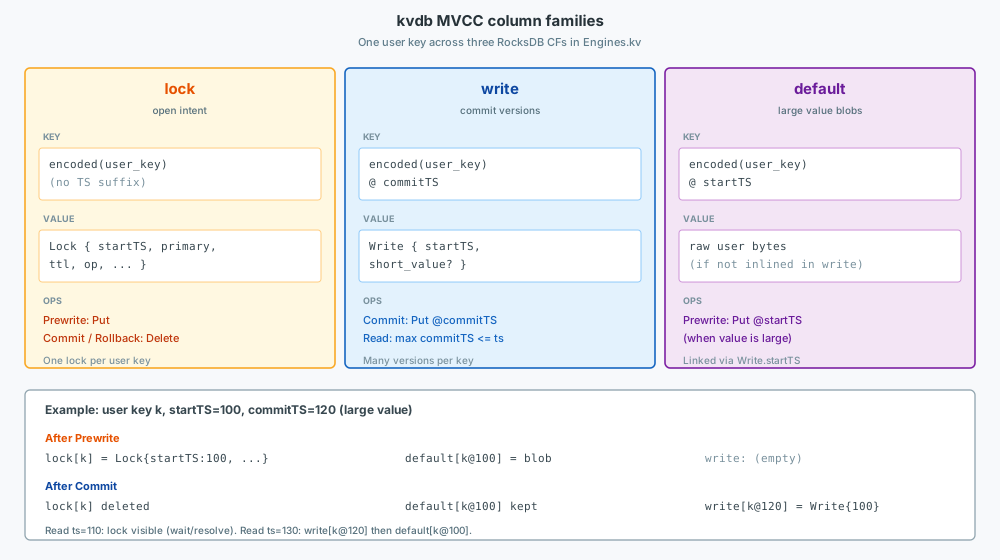
| CF | Key layout | Value | Lifetime |
|---|---|---|---|
lock | Encoded user key (no timestamp suffix) | Lock { startTS, primary, ttl, op, … } | Exists only while the txn holds the key; Prewrite Puts it, Commit/Rollback Deletes it |
write | Encoded user key @ commitTS | Write { startTS, … } (optional short value inline) | One record per commit; snapshot reads pick the latest commitTS ≤ read_ts |
default | Encoded user key @ startTS | Raw user bytes | Written on Prewrite when the value is too large to inline in write; kept after Commit; Write.startTS points here |
One key, two timestamps. startTS (from PD TSO at begin) versions the intent and the large-value slot. commitTS (from TSO at commit) versions the durable commit record. The lock row has no TS in the key because a key may hold only one open lock.
user key k

lock CF:     k              -> Lock { startTS=100, primary=… }     # Prewrite only
write CF:    k @ commitTS   -> Write { startTS=100, … }            # after Commit
default CF:  k @ startTS    -> <blob>                              # if not inlined
Read rule (sketch). A snapshot read at ts ignores lock when safe (or resolves it), then finds the newest write with commitTS ≤ ts, and loads the value from that Write (inline) or from default at Write.startTS. Write rule. Prewrite Puts lock (and maybe default); Commit Puts write and Deletes lock.
4.2.1 Example: one key through Prewrite, Commit, and snapshot reads
User key k already has a committed value "v1" from an earlier txn (startTS=40, commitTS=50). A new txn sets k to "v2" with startTS=100, commitTS=120. Value is stored in default (not inlined).
t0 — initial CF state
lock:     (empty)
write:    k @ 50  -> Write { startTS: 40 }
default:  k @ 40  -> "v1"
Get(k, ts=60) → newest write with commitTS ≤ 60 is k@50 → default[k@40] → "v1".
t1 — after Prewrite apply (Raft entry Puts lock + default)
lock:     k       -> Lock { startTS: 100, primary: k, … }
write:    k @ 50  -> Write { startTS: 40 }          # unchanged
default:  k @ 40  -> "v1"
          k @ 100 -> "v2"                           # new
Get(k, ts=60) still → "v1" (ignores the new default; no write at 100 yet).Get(k, ts=110) sees lock[k] with startTS=100 ≤ 110 → wait or resolve (txn not committed).
Another Prewrite on k conflicts on the lock.
t2 — after Commit apply (Puts write@120, Deletes lock)
lock:     (empty)
write:    k @ 50  -> Write { startTS: 40 }
          k @ 120 -> Write { startTS: 100 }         # new
default:  k @ 40  -> "v1"
          k @ 100 -> "v2"                           # kept
| Snapshot read | Chosen write | Value |
|---|---|---|
Get(k, ts=60) | k@50 → startTS 40 | "v1" |
Get(k, ts=110) | k@50 → startTS 40 | "v1" (commit 120 not visible yet) |
Get(k, ts=130) | k@120 → startTS 100 | "v2" |
Old versions stay until GC compaction removes them; reads do not rewrite prior write / default rows. That is multi-version retention, not an undo log replay.
One RocksDB apply batch is atomic on one store for one Region. Keys in other Regions are other Raft groups; cross-Region atomicity is the client’s 2PC (§4.3).
4.2.2 Write payload: RaftCmdRequest on MVCC CFs
Transactional RPCs become ordinary CF mutations before propose. Raft has no Prewrite message type—only Entry.data = RaftCmdRequest with Put / Delete on CFs.
Logical shape after a Prewrite that takes a lock:
Entry {
  term, index,
  data: RaftCmdRequest {
    header: { region_id, peer, region_epoch, … },
    requests: [
      Put { cf: "lock", key: <user key>, value: <Lock { startTS, primary, … }> },
      // optional: Put { cf: "default", key: <user key>@startTS, value: <blob> }
    ]
  }
}
A later Commit is another entry—typically Put on write at commitTS plus Delete on lock:
requests: [
  Put    { cf: "write", key: <user key>@commitTS, value: <Write { startTS, … }> },
  Delete { cf: "lock",  key: <user key> }
]
let mut cmd = Request::default();
cmd.set_cmd_type(CmdType::Put);
cmd.mut_put().set_cf("lock".into());
cmd.mut_put().set_key(key);
cmd.mut_put().set_value(lock_bytes);
let mut req = RaftCmdRequest::default();
req.mut_requests().push(cmd);
entry.set_data(req.write_to_bytes()?.into());
| Pointer (peer) | Meaning |
|---|---|
commitIndex | Highest Raft index majority-replicated (raftdb / HardState) |
lastApplied | Highest index applied into MVCC / kvdb (≤ commitIndex) |
Log layout and all EntryType examples are in §4.1.
4.3 2PC: Prewrite and Commit
TiKV implements Percolator-style 2PC as two (or more) Region writes. The client chooses a primary key, obtains startTS / commitTS from PD TSO, and issues RPCs to each involved Region leader. TiKV does not run a cross-Region coordinator inside MultiRaftServer.
| Phase | Client | Typical apply on each Region leader |
|---|---|---|
| Prewrite | Lock all keys in the txn (primary first) | Write lock CF (+ default for large values) at startTS |
| Commit | Commit primary, then secondaries | Write write CF at commitTS; delete lock |
| Rollback / ResolveLock | Abort or recover | Clear or finish leftover locks |
Prewrite key:  Lock[key] = { startTS, primary, … }
Commit key:    Write[key]@commitTS; delete Lock[key]
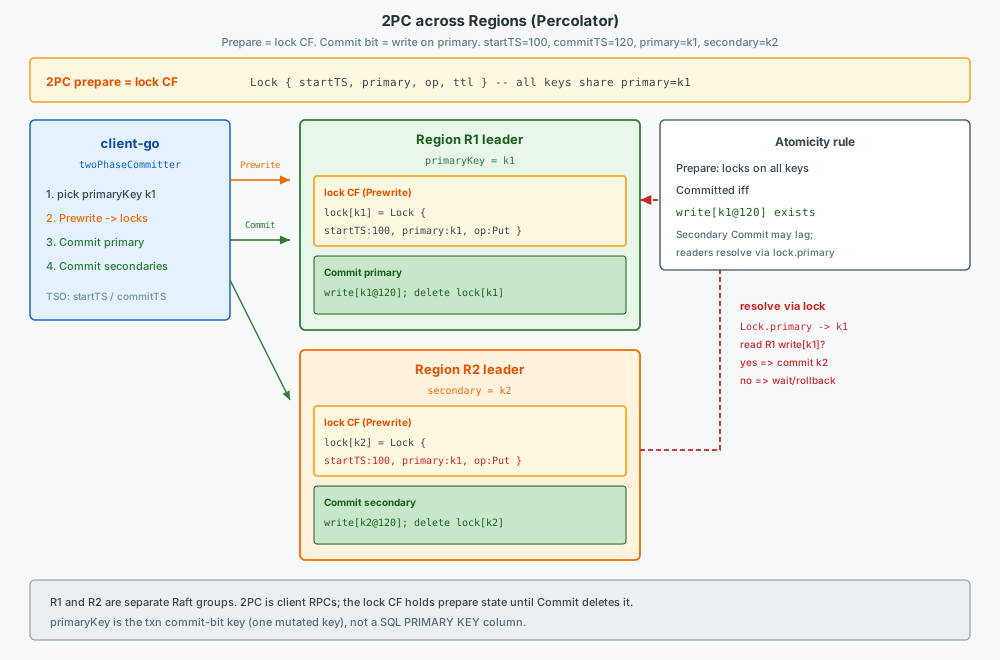
Prewrite’s durable prepare is the lock CF: every key in the txn gets a Lock whose primary field names the commit-bit key. Commit (or resolve) deletes those locks after the primary’s write@commitTS exists.
Single-Region txn. Prewrite then Commit are two Raft-committed applies on that Region’s leader—two entries, two MVCC updates, same propose/apply path as §4.1.
Multi-Region txn. Each Region’s leader runs Prewrite/Commit independently on its key range. Whole-txn atomicity is: committed iff the primary key’s write record exists. Secondaries and readers that see a lock resolve by reading the primary’s MVCC state on its Region (commit, rollback, or wait). That primary-key rule—not a distributed prepare across stores inside TiKV—is the 2PC commit bit.
client (TiDB / client-go)
  ├─ Prewrite(primary) → Region P leader → Raft → lock CF
  ├─ Prewrite(secondaries) → Region S_i leaders → Raft → lock CF
  ├─ Commit(primary) → Region P → Raft → write CF; clear lock
  └─ Commit(secondaries) → Region S_i leaders → Raft → write CF; clear lock
       (async / retry ok: primary Write is the source of truth)
4.3.1 Example: cross-Region atomicity
Client runs one txn that updates two rows in different Regions (PD split the keyspace so each table’s row sits on its own Raft group):
-- logical SQL (TiDB)
BEGIN;
UPDATE accounts SET balance = balance - 100 WHERE id = 1;   -- primary key row
UPDATE accounts SET balance = balance + 100 WHERE id = 2;   -- secondary
COMMIT;
| Role in 2PC | Logical row | Encoded user key (sketch) | Region |
|---|---|---|---|
| primary | accounts.id=1 | t_accounts_r1 | R1 |
| secondary | accounts.id=2 | t_accounts_r2 | R2 |
Client picks t_accounts_r1 as txn primaryKey, startTS=100, commitTS=120. R1 and R2 never share one Raft apply—atomicity is the primary’s write record.
After Prewrite
| Store | lock CF | write CF |
|---|---|---|
| R1 | lock[t_accounts_r1] = Lock { startTS:100, primary:t_accounts_r1, op:Put } | prior committed version only (e.g. @80) |
| R2 | lock[t_accounts_r2] = Lock { startTS:100, primary:t_accounts_r1, op:Put } | prior committed version only |
Txn not committed—there is still no write@120. Snapshot reads use MVCC as follows:
Reader snapshot ts | vs lock.startTS=100 | What the SELECT sees |
|---|---|---|
ts < 100 (e.g. 90) | lock is “in the future” | Ignore lock; newest write with commitTS ≤ ts → original balances |
ts ≥ 100 (e.g. 110) | lock overlaps the snapshot | Must wait / resolve the lock (cannot skip it). If resolve finds the txn still open or rolled back, then read the prior write → original balances; the Prewrite mutation stays invisible until a write@commitTS ≤ ts exists |
So uncommitted data is never returned: older snapshots skip the lock by timestamp; overlapping snapshots resolve first, then still fall back to the previous committed version while the txn has no commit write.
After Commit primary only (R1 finished; R2 Commit delayed)
| Store | lock CF | write CF |
|---|---|---|
| R1 | (empty for this key) | write[t_accounts_r1@120] = Write { startTS:100 } |
| R2 | lock[t_accounts_r2] = Lock { startTS:100, primary:t_accounts_r1, … } | (no @120 yet) |
Whole txn is already committed: write[t_accounts_r1@120] is the commit bit. Row id=2 may still show a lock until secondary Commit or resolve.
Resolve path — reader on R2 sees lock[t_accounts_r2], follows primary → t_accounts_r1, queries R1:
| Step | Action | Result |
|---|---|---|
| 1 | Read R1 for primary at startTS=100 | write[t_accounts_r1@120] exists |
| 2 | Decision | txn COMMITTED |
| 3 | Finish R2 | write[t_accounts_r2@120]; delete lock[t_accounts_r2] |
| 4 | Retry read | both balances visible at commitTS=120 |
If Commit primary never succeeds (crash after Prewrite)
| Store | State | Resolve on R2 |
|---|---|---|
| R1 | no write[t_accounts_r1@120]; lock cleared / rolled back | — |
| R2 | lock[t_accounts_r2] still points at t_accounts_r1 | primary missing commit → ROLLBACK lock[t_accounts_r2] |
Neither Region ends with only one side committed. Cross-Region atomicity is that one primary write, plus lock resolve forcing the secondary to the same decision—not a multi-Region Raft transaction.
Failure modes stay local to the protocol: Prewrite conflict → lock or latch error to the client; majority loss on a Region → that Region cannot commit its phase (NotLeader / timeout); undetermined primary → lock resolution polls the primary Region until write or rollback appears.